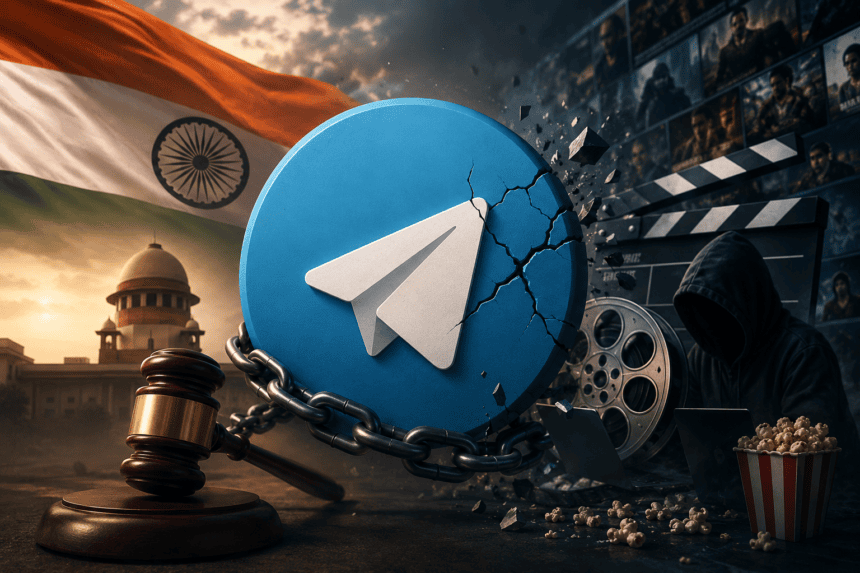
The Indian government has issued a stern ultimatum to Telegram, demanding the encrypted messaging app curb rampant copyright infringement or face potential regulatory action. Officials have given the platform 15 days to address persistent concerns regarding the unauthorized distribution of copyrighted films and television content across its channels.
The Ministry of Information and Broadcasting’s directive targets the platform’s “public channel” feature, which has become a primary hub for movie piracy. While Telegram markets itself on privacy and end-to-end encryption for private chats, the accessibility of its large-scale public groups has made it a digital black market. Rights holders have long argued that the app’s lack of proactive monitoring allows pirated content to circulate with near-total impunity.
The government’s stance is clear: Telegram must implement more aggressive content-moderation tools or risk losing its safe-harbor protections. Under current Indian IT rules, platforms are generally shielded from liability for user-generated content, provided they act swiftly upon receiving valid takedown requests. Officials are now signaling that this protection is not unconditional when a platform becomes a habitual venue for illegal activity.
For the streaming industry, the move is a long-overdue intervention. Major production houses and OTT platforms have struggled to combat the speed at which leaked content appears on Telegram channels, often within minutes of a film’s release. Despite existing reporting mechanisms, content owners claim the process is reactive rather than preventative, with pirated files often reappearing under different channel names moments after being removed.
Telegram has historically maintained that it cooperates with law enforcement requests while upholding its commitment to user privacy. However, the company now faces a logistical challenge: how to police public content at scale without compromising the encryption protocols that define its user experience.
If Telegram fails to satisfy the 15-day requirement, the fallout could be significant. The government holds the authority to restrict access to the platform’s public features or, in an extreme scenario, block the service entirely. For now, the app’s leadership must decide whether to overhaul its moderation infrastructure or risk losing access to one of its largest global markets.