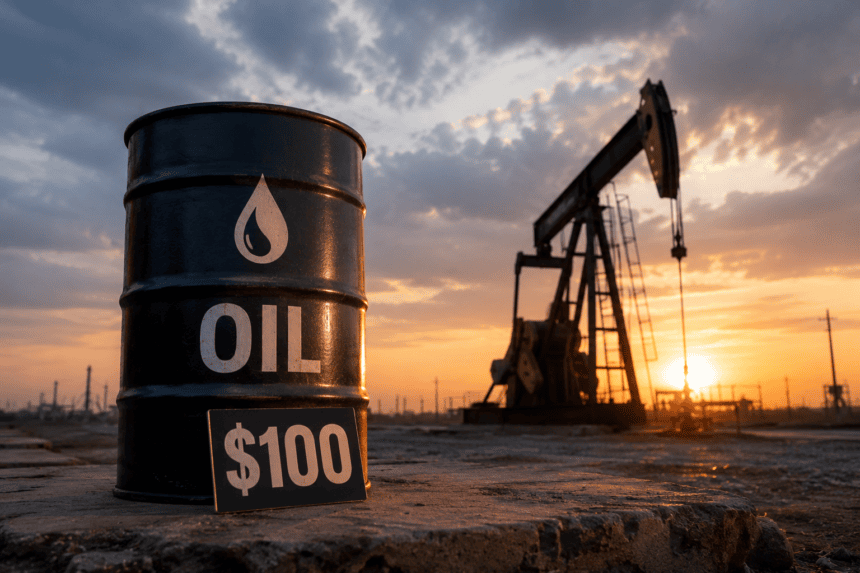
Global oil prices breached the $100-per-barrel threshold early Tuesday, marking the highest point for Brent crude since mid-May. The surge comes as supply bottlenecks tighten and geopolitical tensions in the Middle East show no signs of cooling.
Markets reacted sharply to the news. Brent crude climbed to $100.42 in early Asian trading before settling slightly lower, while U.S. West Texas Intermediate (WTI) tracked the rise, trading near $97. The jump adds immediate pressure to global inflation, which central banks have spent the last year fighting to contain.
The catalyst for this latest climb is twofold. OPEC+ production cuts, led by Saudi Arabia and Russia, have successfully drained global inventories faster than analysts anticipated. Simultaneously, pipeline maintenance in the North Sea and escalating rhetoric from regional powers in the Persian Gulf have investors bracing for further volatility.
“The market is now pricing in a sustained deficit through the winter,” said energy strategist Marcus Thorne. “We aren’t just looking at a supply squeeze; we’re looking at a complete lack of a buffer if another outage occurs.”
For consumers, the impact will be felt at the pump within weeks. Refiners are already struggling with high costs for crude, and those expenses are being passed directly to the wholesale market. If prices hold above $100, analysts expect a ripple effect across transportation and manufacturing sectors, potentially derailing the cooling inflation data seen in recent months.
The White House has yet to announce any new releases from the Strategic Petroleum Reserve, a tactic used frequently last year to dampen price spikes. With the reserve at its lowest level in decades, the administration’s options for intervention are limited.
As traders watch the charts, the focus remains on the next OPEC+ meeting in Vienna. Any sign that the alliance might ease production cuts could provide relief, but current signals suggest they are comfortable with triple-digit oil.
The era of cheap energy has closed, and the global economy is once again paying the price.