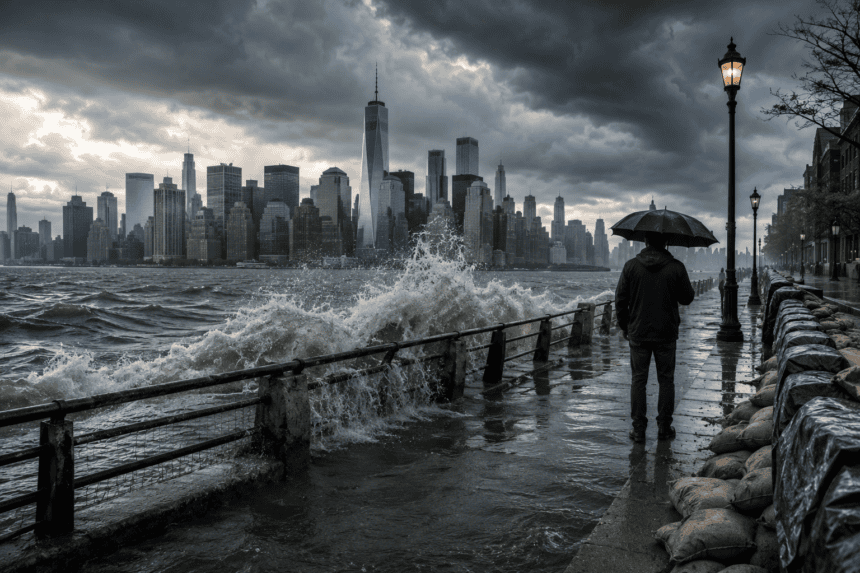
New York needs $500 billion to shield its infrastructure from the accelerating threat of climate-driven storms. A new assessment from state agencies and urban planners lays out a staggering price tag for the massive overhaul required to keep the city’s transit, power grid, and housing stock above water.
The figure represents more than just a line item; it is a reality check for a city built on the assumption of a stable coastline. For decades, New York treated extreme flooding as a rare anomaly. That era is over. The report highlights that without this half-trillion-dollar investment, the city faces a cycle of catastrophic damage that will eventually outpace its ability to recover.
The burden falls largely on aging infrastructure. The city’s subway system, still reeling from the impact of Hurricane Ida, remains the most vulnerable point of failure. Engineers noted that sealing tunnels and installing high-capacity pumps across the MTA network alone will consume a significant portion of the budget.
“We are essentially retrofitting a 19th-century city for a 22nd-century climate,” said one lead researcher involved in the study. “The cost is high, but the alternative is a slow-motion abandonment of the city’s most critical low-lying districts.”
The financing plan remains the missing piece of the puzzle. With the state and city already facing tight budgets, officials are looking toward a mix of federal grants, private-public partnerships, and potentially new climate-resilience taxes on high-value coastal real estate. Critics argue that these costs will inevitably trickle down to residents, raising questions about who can afford to stay in a city that is becoming increasingly expensive to protect.
The report also identifies the “hidden” costs of inaction. Beyond the direct damage to property, the economic ripple effects—lost business days, insurance market volatility, and the potential for credit rating downgrades—could cost the city billions more than the mitigation efforts themselves.
For now, the $500 billion estimate serves as a baseline. As weather models become more precise and sea-level rise projections continue to climb, that number is likely to be a floor, not a ceiling. The city’s survival now depends on whether it can move from emergency response to a permanent, multi-decade construction project.