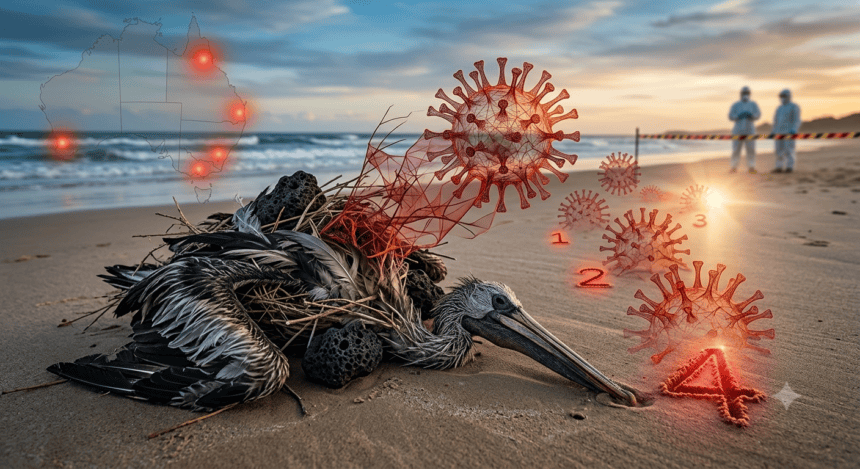
BRISBANE — Queensland health authorities have confirmed the state’s first detection of the H5N1 avian influenza virus, marking the fourth Australian state to report the pathogen. The virus was identified at a poultry farm near the Darling Downs, triggering an immediate quarantine of the facility and a mandatory movement freeze on birds within the surrounding region.
The detection follows similar outbreaks across New South Wales, Victoria, and the Australian Capital Territory. While the H5N1 strain has caused significant disruption to global food supplies and wildlife populations, Australian officials maintain that the risk to the general public remains low.
Biosecurity Queensland has mobilized emergency response teams to cull affected flocks and sanitize the site. The primary goal is to prevent the virus from jumping to commercial operations nearby. Agriculture officials are currently tracing the movement of equipment and personnel to identify how the virus reached this specific site, as the farm had no recent history of interstate bird transfers.
“We are acting with extreme caution,” said a senior biosecurity officer during a morning briefing. “The focus is on containment. Every hour we keep this isolated is an hour we keep the broader industry safe.”
The economic impact is mounting. Supermarkets in affected regions have already seen sporadic egg shortages, and industry leaders warn that prices may climb if the containment measures fail to halt the spread. Poultry producers are under strict orders to increase biosecurity measures, including limiting visitor access and ensuring all feed is protected from wild birds—the suspected primary carriers of the virus.
Unlike previous seasonal outbreaks, this H5N1 strain shows a concerning ability to persist in the environment. Veterinarians are monitoring wild bird populations for unusual mortality events, but the sheer scale of the Australian landscape makes comprehensive surveillance a logistical hurdle.
As the state moves into its second week of containment, the question for consumers is not just about the price of eggs, but how long the supply chain can withstand these localized lockdowns. With the virus now present in four states, the federal government is facing pressure to provide a unified national strategy rather than relying on state-by-state responses.
For now, the site remains under heavy guard, with agricultural inspectors confirming that the culling process is expected to conclude by Friday. Further testing will determine if this strain matches the variants seen in southern states, or if it represents a new, independent introduction to the region.