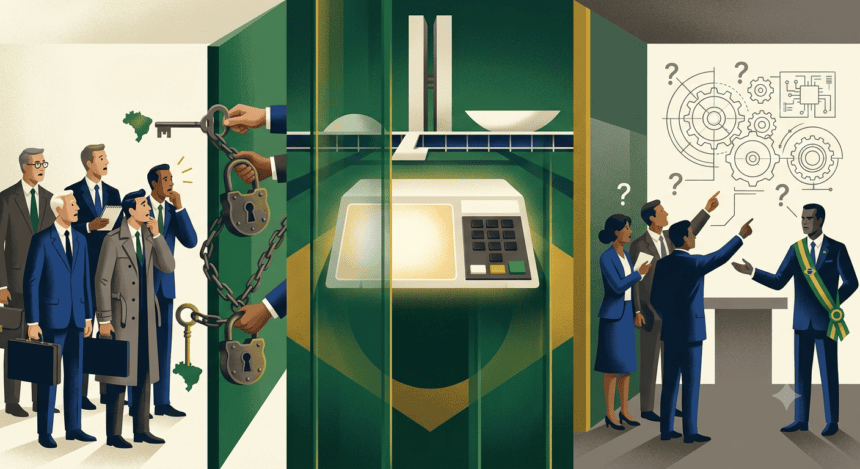
BRASILIA — The Brazilian government has denied a request from a group of U.S. lawmakers seeking direct access to the nation’s electronic voting systems. The delegation, led by Republican members of the U.S. House of Representatives, intended to conduct an independent audit of the infrastructure used in recent presidential elections.
Foreign Ministry officials in Brasilia rejected the request on procedural grounds, citing national sovereignty and the independence of Brazil’s Superior Electoral Court (TSE). The move underscores the growing friction between segments of the U.S. political right and Brazil’s electoral institutions.
The delegation’s push followed months of unsubstantiated claims regarding the integrity of Brazil’s 2022 election results. Proponents of the visit argued that the U.S. has a vested interest in the stability of democratic processes in the Western Hemisphere. Brazilian authorities, however, viewed the request as an attempt to lend credibility to conspiracy theories that have already fueled domestic unrest, including the January 8 riots in the capital.
“We aren’t a laboratory for foreign political experiments,” said a senior official within the Brazilian government, who spoke on condition of anonymity due to the sensitivity of the diplomatic back-and-forth. “The systems have been audited by domestic experts and international observers. We don’t report to foreign legislators.”
The TSE has consistently maintained that its electronic ballot boxes are secure and effectively immune to the type of external hacking often alleged by critics. Since the introduction of electronic voting in 1996, Brazil has avoided the protracted vote-counting delays seen in other nations, though the reliance on proprietary software remains a point of contention for skeptics.
The U.S. Embassy in Brasilia declined to comment on the specific itinerary of the lawmakers, describing the visit as a private legislative matter rather than an official state action. Critics of the delegation’s effort suggest the move was designed to generate headlines for domestic U.S. consumption rather than to uncover any genuine technical flaws.
By blocking the visit, the administration of President Luiz Inácio Lula da Silva has drawn a firm line on international interference. For now, the debate over Brazil’s ballot boxes remains a domestic issue — and the government in Brasilia intends to keep it that way.