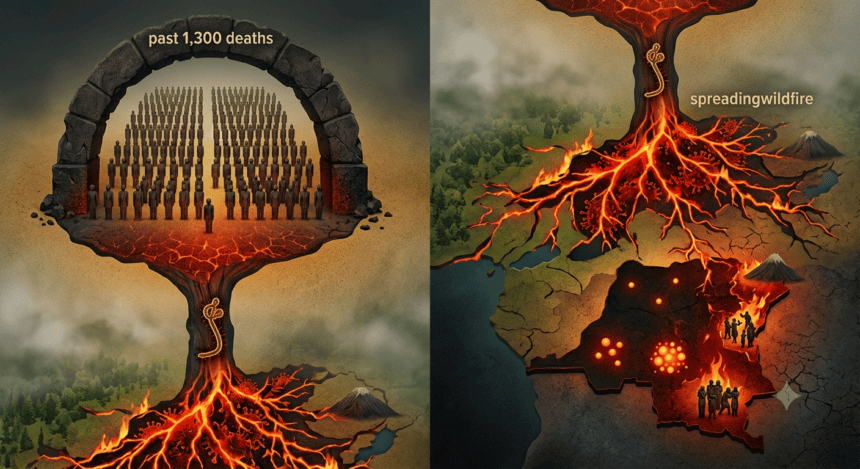
The Ebola outbreak in the Democratic Republic of Congo has crossed a grim threshold, with health officials confirming the death toll has now surpassed 1,300. The virus is moving through the North Kivu and Ituri provinces with a speed that is overwhelming local clinics and frustrating international response teams.
This isn’t just a statistical spike; it’s a failure of containment. The virus is spreading like wildfire through densely populated areas where trust in health authorities has evaporated. Families are hiding the sick, preferring home-based care to the isolation units they fear are death traps.
Public health workers are now operating in a climate of open hostility. Last week alone, three separate health centers were targeted by armed groups in the region, forcing aid agencies to suspend operations in critical hotspots. When the men in hazmat suits arrive, they are often met with stones instead of patients.
“We are fighting a ghost,” one field epidemiologist said. “You trace a contact, you track a chain of transmission, and then the whole village disappears into the bush. By the time we find them, the virus has already moved on to the next settlement.”
The numbers are stark. The World Health Organization reports that more than 2,000 cases have been identified since the outbreak began last August. With a mortality rate hovering near 65%, the math suggests the death toll will climb significantly before the current wave peaks.
The security situation has effectively paralyzed the vaccination campaign. While the rVSV-ZEBOV vaccine has proven effective in controlled settings, it requires a stable, tracked supply chain that simply doesn’t exist in a conflict zone. Supplies are sitting in warehouses in Goma, waiting for safe passage that may not come for weeks.
For the people in these provinces, the threat is twofold: the invisible virus and the visible violence. As long as the political instability continues to block medical access, the death toll will remain a grim reflection of a broken system rather than a lack of scientific tools.
International donors have pledged millions, but money cannot buy peace. Until health workers can move without armed guards and patients can seek care without fear, the virus will continue to find its path.