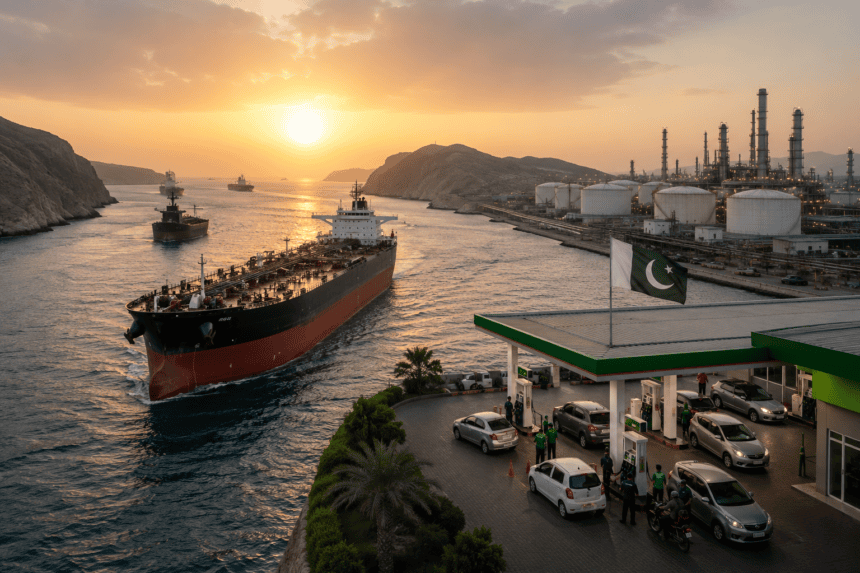
Petroleum Minister Musadik Malik has signaled potential relief for Pakistani consumers at the pump, citing the successful rerouting of oil tankers that had been stalled by the ongoing security volatility in the Bab-al-Mandeb Strait.
The government’s latest assessment suggests that the arrival of these delayed cargoes will stabilize domestic supply chains, providing the fiscal breathing room necessary to adjust retail fuel prices in the upcoming fortnightly review.
For months, the maritime conflict in the Red Sea forced tankers to take the longer route around the Cape of Good Hope. This detour added weeks to transit times and significantly inflated insurance premiums, costs that were ultimately passed down to local oil marketing companies and, by extension, the Pakistani motorist. With these shipments now clearing the bottleneck, the primary driver of recent supply-side cost pressure is beginning to recede.
“We are monitoring the landed cost of these specific cargoes,” Malik told reporters in Islamabad. “Once the logistics chain normalizes, the benefit of lower freight and insurance premiums will be passed directly to the public.”
While the minister stopped short of promising a specific rupee-per-liter reduction, the tone marks a shift from the defensive stance the ministry held throughout the winter. The global benchmark Brent crude has remained relatively range-bound despite regional tensions, but Pakistan’s local pricing has been hampered more by logistics and the volatility of the rupee than by the raw cost of oil itself.
Analysts remain cautious, however. Energy economist Dr. Farhan Ali noted that while the rerouting of ships is a positive development, the government’s reliance on petroleum levies to bridge its fiscal deficit remains a significant barrier to substantive price cuts.
“The cost of shipping is down, but the government’s revenue targets are rigid,” Ali said. “Any relief at the pump will likely be modest unless the finance ministry decides to sacrifice a portion of its tax collection to provide a political win.”
As the Petroleum Division prepares its recommendations for the next pricing cycle, the focus remains on whether the government will prioritize inflationary relief or revenue stability. With the latest shipments now reaching local ports, the ministry’s argument for maintaining current high price levels is rapidly losing its primary justification.
The next price notification is expected by the end of the week, serving as the first real test of whether the easing of maritime bottlenecks will translate into actual savings for the Pakistani consumer.