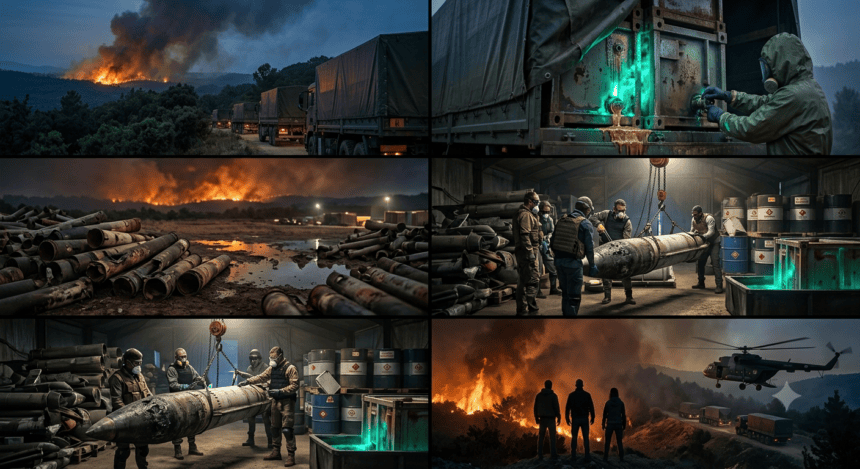
The blaze at the Saint-Médard-en-Jalles site near Bordeaux last week wasn’t just another industrial accident. It was a stark reminder of the volatile neighbor living in the backyard of a residential community.
The fire, which broke out at a facility belonging to ArianeGroup, sent a towering plume of smoke over the Gironde region. While initial reports focused on the “controlled” nature of the blast, residents living just six miles away remain uneasy. This wasn’t a standard chemical spill; this was a site housing high-performance rocket fuel and aging military hardware.
For the people of Saint-Médard-en-Jalles, the proximity to a site that handles propellants for ballistic missiles and space launch vehicles is a constant, quiet tension. When the sirens wailed, that tension became a reality.
“We felt the vibration before we saw the smoke,” said one local resident who has lived in the area for two decades. “You know what they store there. You just hope the protocols are as good as they claim.”
ArianeGroup maintains that safety measures functioned exactly as designed. They’ve characterized the event as a localized incident involving the combustion of propellant waste. Yet, the lack of immediate, granular data regarding the specific chemical composition of the smoke caused a brief panic in neighboring towns.
This facility is a cornerstone of France’s strategic autonomy. It is where the M51 submarine-launched ballistic missiles are maintained. It’s also a key hub for the Ariane space program. The dual nature of the site—serving both high-stakes national defense and commercial spaceflight—creates a complex regulatory environment.
Environmental groups have already begun questioning the long-term storage of hazardous materials in such a densely populated corridor. They point to the “used missiles” and chemical byproducts stored on-site as ticking clocks. The fire was extinguished within hours, but the air quality samples are still being analyzed by local authorities.
The French government has promised a full investigation into the chain of command that led to the breach. For now, the site remains under heavy scrutiny.
Safety at the facility isn’t just about preventing fire; it’s about the containment of materials that have no room for error. Until the final report on the cause of the ignition is released, the people six miles away will keep watching the horizon.