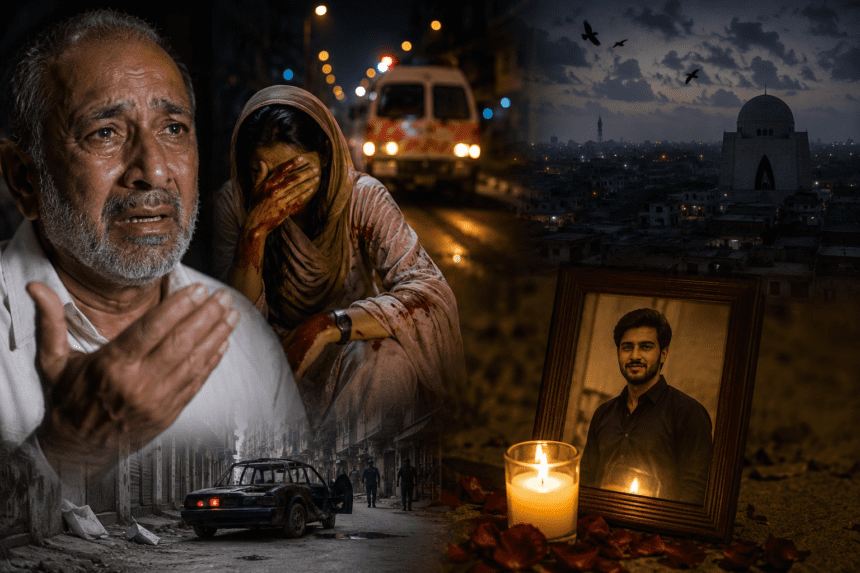
It took five hours for help to reach a woman shot during a violent robbery in Karachi — a delay her father-in-law says occurred while his son lay dead on the pavement beside her.
The father’s account, shared with reporters outside the hospital, serves as a grim indictment of the city’s failing emergency response. His son was shot and killed after resisting muggers; his daughter-in-law was wounded in the same burst of gunfire.
“My daughter-in-law was crying for help for five hours,” the father said, his voice strained with a mix of grief and disbelief. “Five hours. No one came. No one helped.”
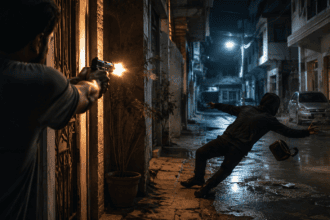
The incident follows a predictable, bloody pattern in Karachi. Armed men on a motorcycle intercepted the couple, demanding valuables. When the son reportedly hesitated or resisted, the gunmen opened fire and fled into the city’s labyrinthine streets.
The “so what” here isn’t just the crime itself — it’s the vacuum that follows. In Karachi, a gunshot wound often starts a race against a clock that isn’t even ticking. Private hospitals frequently refuse to treat “medico-legal” cases until police arrive, and the police, stretched thin or indifferent, rarely arrive with the urgency the dying require.
The father’s testimony suggests his daughter-in-law was left to bleed out in the dark for nearly half a work shift before the state or emergency services intervened.
“Is this a city or a graveyard?” the father asked. It’s a question being asked more frequently across Karachi as street crime fatalities continue to climb.
Police officials have issued the standard response: a case has been registered, and they’re “scanning CCTV footage.” But for this family, the footage won’t explain why a wounded woman was left waiting five hours for the basic human right of medical attention.
The son’s body has been shifted for an autopsy. The daughter-in-law remains in the hospital. The killers are still at large. For the father, the trauma isn’t just the murder — it’s the five hours his family spent realizing they were completely on their own.