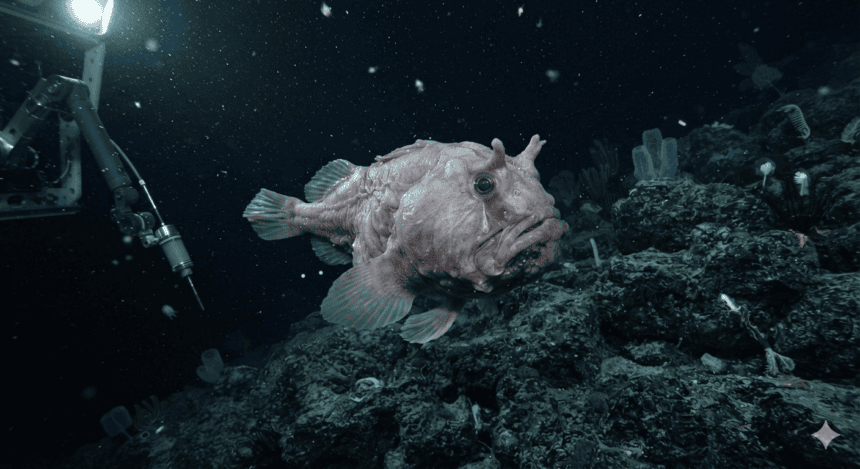
Marine scientists have reported a rare sighting of a “Devil Fish” during a deep-sea research expedition, providing valuable new insights into one of the ocean’s most mysterious and least understood creatures.
According to researchers, the animal was observed hundreds of meters below the ocean’s surface using a remotely operated underwater vehicle (ROV). Encounters with this elusive deep-sea species are exceptionally rare because it inhabits dark, high-pressure environments that are difficult for humans to explore.
Scientists say the sighting has allowed researchers to study the animal’s appearance, swimming behavior, and interaction with its surroundings without disturbing it in its natural habitat. High-definition video footage and images collected during the expedition are expected to improve scientific understanding of deep-sea biodiversity.
Marine biologists explain that the “Devil Fish” is known for its unusual body shape, dark coloration, and unique adaptations that enable it to survive in the extreme conditions of the deep ocean. Like many deep-sea organisms, it has evolved specialized features to cope with near-freezing temperatures, crushing pressure, and the absence of sunlight.
Researchers believe observations like this are essential for understanding how life has adapted to one of Earth’s most challenging environments. The findings may also help scientists identify previously unknown species and better understand the evolution of marine life.
Experts emphasize that much of the deep ocean remains unexplored, meaning countless marine organisms have yet to be documented. Continued exploration using advanced underwater technology is expected to reveal more about the hidden ecosystems that exist beneath the sea.
Scientists also stressed the importance of protecting deep-sea habitats from growing threats such as climate change, pollution, plastic waste, and deep-sea mining. They say preserving these fragile ecosystems is critical for maintaining global marine biodiversity.
The rare sighting has been described as an important scientific achievement, highlighting both the mysteries of the deep ocean and the need for continued investment in marine research and conservation.