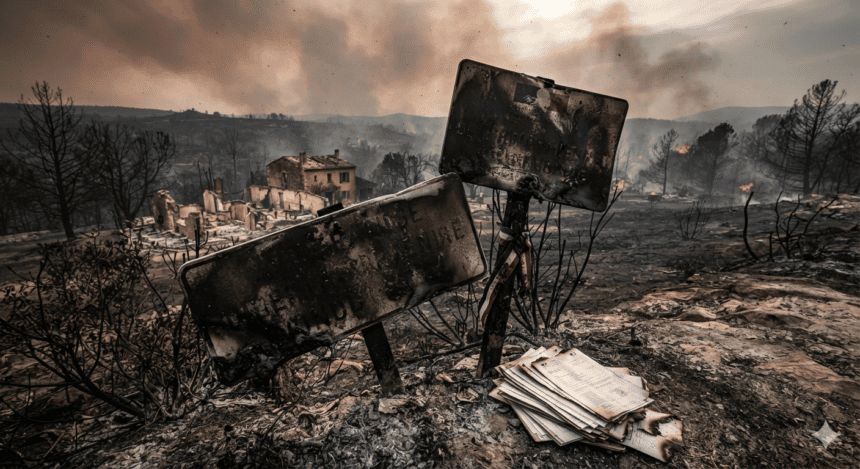
French authorities consistently failed to enforce mandatory wildfire prevention regulations in the very regions currently devastated by record-breaking blazes. Inspections of forested areas—long required by law—were either bypassed or ignored by local officials, leaving residents and emergency responders exposed to preventable catastrophe.
The rules, known as *Obligations Légales de Débroussaillement* (OLD), require property owners in high-risk zones to clear brush and thin out trees to create firebreaks. These measures aren’t suggestions; they are the primary defense against the rapid spread of flames in dry, dense vegetation. Local mayors, tasked with auditing these clearances, admitted in recent internal reports that enforcement was “not a priority” due to limited municipal staffing.
“We knew the brush was a tinderbox,” one regional fire chief said, speaking on condition of anonymity. “But when you report a violation, it sits in a filing cabinet for months. By the time we get the authority to intervene, the season is already upon us.”
The failure to clear these zones has directly impacted fire behavior. In areas where homeowners complied with the mandates, firefighters found defensible space that slowed the inferno, giving them a chance to contain the perimeter. In zones where officials looked the other way, the fire moved with unchecked speed, turning residential pockets into death traps.
The French government’s own audit from last year suggested that fewer than 30% of properties in high-risk areas were fully compliant with fire-clearing laws. Despite this data, no nationwide enforcement campaign followed. Instead, officials relied on a voluntary system that failed to account for the increasing severity of heatwaves turning Mediterranean forests into volatile fuel.
Critics argue that the blame sits squarely on a system that prioritizes bureaucratic process over active oversight. While the interior ministry has pledged to review the response to these fires, the immediate reality for those who lost their homes is that the tools for survival were already in the law books—they were simply never used.