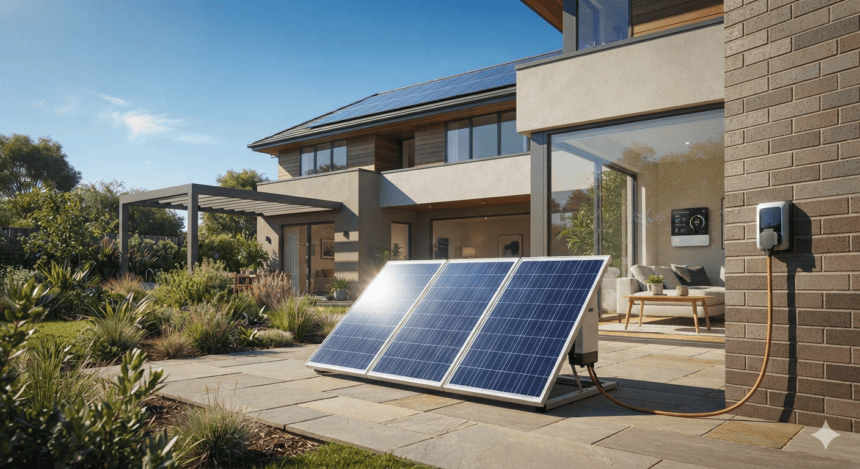
Plug-in solar panels—often marketed as “balcony power plants”—have moved from fringe tech to mainstream hardware store shelves. The premise is simple: buy a panel, plug it into a standard wall outlet, and watch your electricity meter slow down.
But the reality of installing these systems involves more than just unboxing a device and finding a sunny spot.
The Grid Connection
The core appeal is the micro-inverter. It converts DC power from the panel into AC power compatible with your home’s wiring. Unlike traditional rooftop arrays that require professional electrical certification, these units are designed to feed energy directly into your home’s internal circuit.
When your appliances draw power, they pull from the solar feed first. If your panel produces 300 watts and your refrigerator and lights are pulling 200, you’re effectively running on free energy. If you draw more than the panel produces, the grid seamlessly covers the difference.
Regulatory Hurdles
The “plug-and-play” label is misleading. While the physical installation is simple, the regulatory side is not. Many local utility companies have specific safety protocols. In some jurisdictions, you must register the device with the utility provider to ensure the grid can handle the feedback.
Ignoring registration isn’t just a bureaucratic oversight; it can void your home insurance policy. If a surge occurs and your non-compliant system is blamed, you’re on the hook for the damages. Before buying, check if your local utility requires a specific “anti-islanding” feature—a safety mechanism that kills the power to the plug if the grid goes down, preventing you from electrocuting a utility worker repairing lines down the street.
The Math of ROI
Expectations regarding savings need a reality check. A single panel typically outputs between 300 and 400 watts under perfect conditions. In reality, clouds, panel angle, and seasonal shifts mean you’ll rarely hit peak capacity for more than a few hours a day.
For most households, these units don’t replace an energy bill; they shave a small percentage off the “baseload”—the power used by devices running 24/7, like your router, alarm system, or fridge. If you’re paying $600 for a kit, don’t expect a break-even point in under five to seven years.
Installation Pitfalls
Don’t use an extension cord. Manufacturers warn against it for a reason: standard household cords aren’t rated for the constant, high-amperage heat generated by solar output. The panel must plug directly into a dedicated wall outlet.
Furthermore, ensure your outlet is on a circuit that isn’t already maxed out. If you’re running a space heater or a high-draw air conditioner on the same circuit, you risk tripping your breaker—or worse, overheating the wiring behind your walls.
The Bottom Line
These panels are a tool for incremental energy reduction, not a path to off-grid independence. They work best for renters or apartment dwellers who can’t install roof-mounted systems but want to offset their baseline power consumption.
If you decide to move forward, treat the electrical safety requirements with the same seriousness you’d apply to a major kitchen appliance. A solar panel is an electrical generator, not a smartphone charger. Treat it like one.