New research into the Early Jurassic Era is providing fresh clues about how dinosaurs rose to dominate life on Earth following one of the planet’s greatest mass extinction events. The findings are helping paleontologists better understand the evolution, diversification, and global spread of dinosaurs nearly 201 to 174 million years ago.
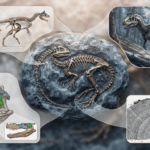
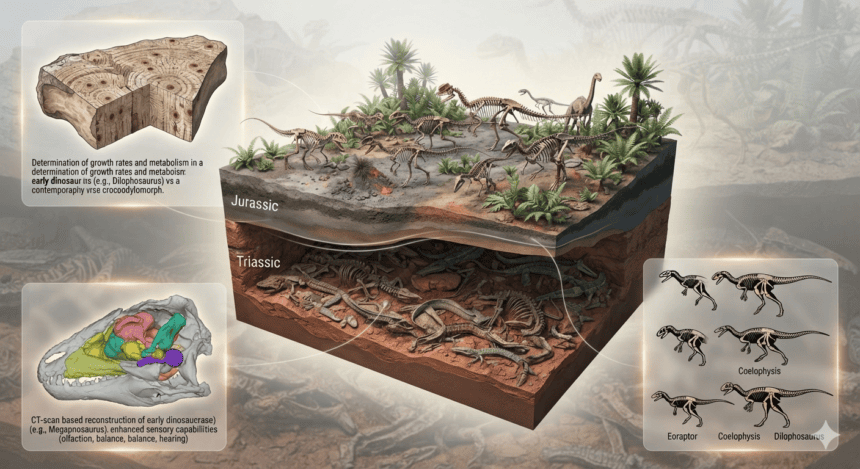
Researchers examined fossil remains, ancient rock formations, and trace fossils from multiple continents using advanced dating techniques, CT scanning, and computer modeling. The study reveals that the Early Jurassic was a period of rapid evolutionary change, during which dinosaurs adapted to a wide variety of environments and ecological niches.
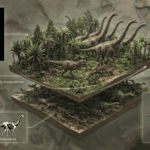
Scientists believe the extinction event at the end of the Triassic Period created new opportunities for dinosaurs to expand. With many competing species disappearing, early dinosaurs evolved into a diverse range of herbivores and carnivores that occupied forests, floodplains, deserts, and coastal regions.
The research also highlights the emergence of some of the earliest long-necked sauropodomorphs, armored dinosaurs, and large predatory theropods, laying the foundation for the giant dinosaur groups that would later dominate the Jurassic and Cretaceous periods.
Researchers found evidence that changing climates, volcanic activity, and shifting ecosystems played important roles in shaping dinosaur evolution. These environmental changes influenced their body size, feeding strategies, and movement across ancient supercontinents.
The study also sheds light on the development of key dinosaur characteristics, including more efficient locomotion, stronger skeletons, and specialized teeth adapted to different diets. These evolutionary innovations helped dinosaurs thrive for more than 160 million years.
Experts say the findings improve our understanding of one of the most important chapters in Earth’s history and demonstrate how environmental change can drive the evolution of entirely new ecosystems.
Future fossil discoveries and advanced research technologies are expected to reveal even more about how the Early Jurassic shaped the remarkable age of the dinosaurs.