Introduction
Stress has become an unavoidable part of modern life. From hectic work schedules and family responsibilities to financial pressures and constant digital distractions, many people struggle to find time to relax. While occasional stress is a normal response to challenges, chronic stress can negatively affect both physical and mental health. It may lead to headaches, muscle tension, poor sleep, anxiety, digestive problems, and even increase the risk of chronic diseases.
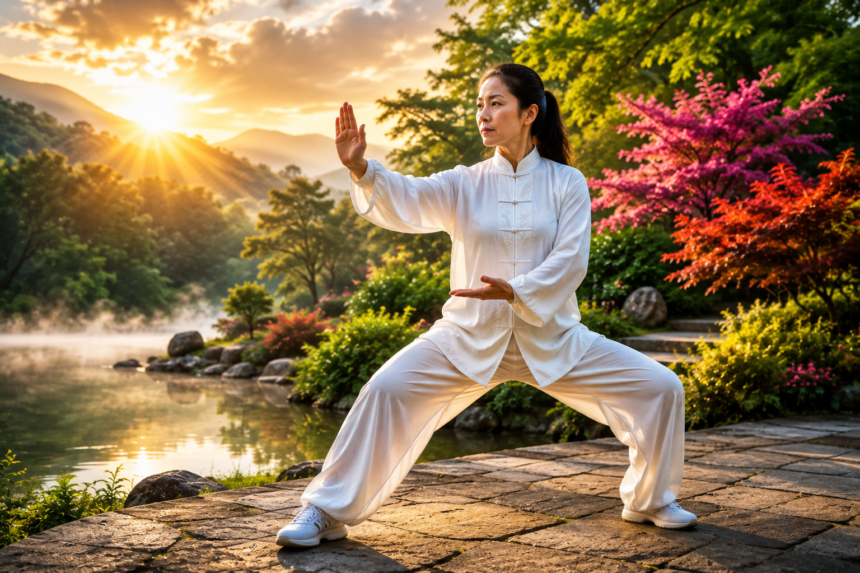
Fortunately, there are simple and natural ways to manage stress, and one of the most effective is Tai Chi. Often described as “meditation in motion,” Tai Chi is a gentle form of exercise that combines slow, flowing movements with deep breathing and mindfulness. Originally developed in ancient China as a martial art, Tai Chi is now practiced worldwide for its remarkable health benefits. Whether you are young or old, physically active or just beginning your fitness journey, Tai Chi can help calm your mind, strengthen your body, and improve your overall well-being.
What Is Tai Chi?
Tai Chi (pronounced “tie chee”) is an ancient Chinese practice that blends gentle physical movements, controlled breathing, and mental focus. Unlike high-intensity workouts, Tai Chi emphasizes slow, graceful motions performed in a continuous sequence. Every movement is coordinated with breathing, helping the body and mind work together harmoniously.
Tai Chi is based on the traditional Chinese concept of balancing the body’s energy, often referred to as “Qi” (pronounced “chee”). While modern science explains its benefits differently, research supports that Tai Chi improves balance, flexibility, muscle strength, cardiovascular health, and mental relaxation.
Why Tai Chi Is Effective for Stress Relief
Stress activates the body’s “fight-or-flight” response, causing the release of stress hormones like cortisol and adrenaline. While this response is useful in emergencies, prolonged activation can damage health.
Tai Chi helps reverse this process by encouraging the body’s relaxation response. The slow movements and deep breathing activate the parasympathetic nervous system, which slows the heart rate, lowers blood pressure, and reduces muscle tension.
Regular Tai Chi practice can:
- Reduce stress hormones
- Improve mood
- Increase feelings of relaxation
- Reduce anxiety
- Improve sleep quality
- Enhance emotional resilience
- Increase focus and concentration
Because Tai Chi combines physical activity with mindfulness, it benefits both the body and the mind at the same time.
A Simple Tai Chi Exercise to Relieve Stress
You don’t need any special equipment or experience to begin Tai Chi. The following beginner-friendly exercise can be practiced at home in just 10 to 15 minutes.
Step 1: Find a Quiet Space
Choose a calm environment where you can move comfortably without distractions. Stand with your feet shoulder-width apart.
Relax your shoulders and keep your knees slightly bent.
Step 2: Practice Deep Breathing
Close your eyes if comfortable.
Take a slow breath in through your nose for four seconds.
Allow your abdomen to expand naturally.
Exhale gently through your mouth for six seconds.
Repeat five times.
Step 3: Raise Your Arms Slowly
As you inhale, slowly lift both arms in front of your body until they reach shoulder height.
Keep your elbows relaxed.
Imagine lifting a soft cloud.
Step 4: Lower Your Arms
As you exhale, gently lower your hands back to your sides.
Imagine releasing tension and stress with each movement.
Repeat this movement 8–10 times.
Step 5: Shift Your Weight
Slowly shift your body weight onto your right foot.
Then gradually move it to your left foot.
Allow your arms to move naturally with your body.
Keep your breathing slow and steady.
Continue for several minutes.
Step 6: Finish Calmly
Stand still with your hands resting comfortably by your sides.
Take three slow, deep breaths.
Notice how your body feels more relaxed and your mind more peaceful.
Physical Health Benefits of Tai Chi
Although Tai Chi is gentle, it offers numerous physical health benefits.
Improves Balance
Tai Chi strengthens the muscles of the legs and improves coordination, helping reduce the risk of falls, especially in older adults.
Increases Flexibility
Slow stretching movements improve joint mobility and reduce stiffness.
Strengthens Muscles
Holding controlled positions gently builds muscle strength without placing excessive stress on the joints.
Supports Heart Health
Studies suggest that regular Tai Chi practice may help lower blood pressure, improve circulation, and support cardiovascular fitness.
Reduces Chronic Pain
Research indicates that Tai Chi may help relieve pain associated with:
- Osteoarthritis
- Lower back pain
- Neck pain
- Fibromyalgia
Mental Health Benefits
Tai Chi is equally valuable for emotional well-being.
Reduces Anxiety
Mindful breathing helps calm racing thoughts and lowers anxiety levels.
Improves Sleep
People who practice Tai Chi regularly often experience better sleep quality and fewer nighttime awakenings.
Enhances Concentration
The slow, deliberate movements require focus, helping improve attention and mental clarity.
Boosts Mood
Physical movement stimulates the release of endorphins—the body’s natural “feel-good” chemicals.
Scientific Evidence
Numerous scientific studies support Tai Chi as an effective stress-management technique.
Researchers have found that Tai Chi can:
- Lower cortisol (the primary stress hormone)
- Reduce symptoms of anxiety and depression
- Improve quality of life
- Enhance cognitive function
- Increase balance and mobility
- Reduce fatigue
Health professionals increasingly recommend Tai Chi as part of a healthy lifestyle because it combines exercise, meditation, and relaxation in one activity.
Who Can Practice Tai Chi?
Tai Chi is suitable for almost everyone, including:
- Older adults
- Office workers
- Students
- Beginners
- People recovering from illness
- Individuals with mild arthritis
- People looking for a low-impact exercise
However, those with severe medical conditions or recent surgeries should consult their healthcare provider before beginning any new exercise routine.
Tips for Beginners
To get the most from Tai Chi:
- Practice in comfortable clothing.
- Wear supportive, flat shoes.
- Start with 10 minutes daily.
- Focus on slow, smooth movements rather than speed.
- Coordinate every movement with your breathing.
- Practice consistently for the best results.
Remember, Tai Chi is not about perfection—it is about relaxation and mindful movement.
Common Mistakes to Avoid
Many beginners unknowingly make mistakes that reduce the effectiveness of Tai Chi.
Avoid:
- Holding your breath
- Rushing through movements
- Locking your knees
- Tensing your shoulders
- Practicing immediately after a heavy meal
Relaxation should remain your primary goal throughout the session.
Additional Ways to Reduce Stress
Tai Chi works even better when combined with other healthy habits, such as:
- Getting 7–9 hours of quality sleep
- Eating a balanced diet rich in fruits and vegetables
- Drinking enough water
- Spending time outdoors
- Limiting screen time before bed
- Practicing gratitude or meditation
- Staying physically active throughout the week
Frequently Asked Questions (FAQs)
How long should I practice Tai Chi each day?
Beginners can start with 10–15 minutes daily. As you become more comfortable, you can gradually increase your practice to 30 minutes or longer.
Can Tai Chi help with anxiety?
Yes. Regular Tai Chi practice has been shown to reduce anxiety symptoms by combining deep breathing, gentle movement, and mindfulness.
Is Tai Chi suitable for seniors?
Absolutely. Tai Chi is widely recommended for older adults because it improves balance, flexibility, and coordination while placing minimal stress on the joints.
Do I need special equipment?
No. Comfortable clothing and supportive shoes are usually all you need.
Can Tai Chi replace regular exercise?
Tai Chi is an excellent form of physical activity but should ideally be combined with strength training and moderate aerobic exercise for complete fitness.
Conclusion
Tai Chi is one of the simplest and most effective natural methods for reducing stress while improving overall health. Its combination of slow movements, controlled breathing, and mindfulness creates a powerful relaxation response that benefits both the body and mind. Unlike many fitness routines, Tai Chi requires no expensive equipment, can be practiced almost anywhere, and is suitable for people of nearly all ages and fitness levels. Just 10 to 20 minutes of daily practice can help reduce anxiety, improve sleep, enhance balance, and increase your sense of well-being. By making Tai Chi a regular part of your routine, you can develop healthier ways to cope with life’s challenges and enjoy a calmer, more balanced lifestyle.