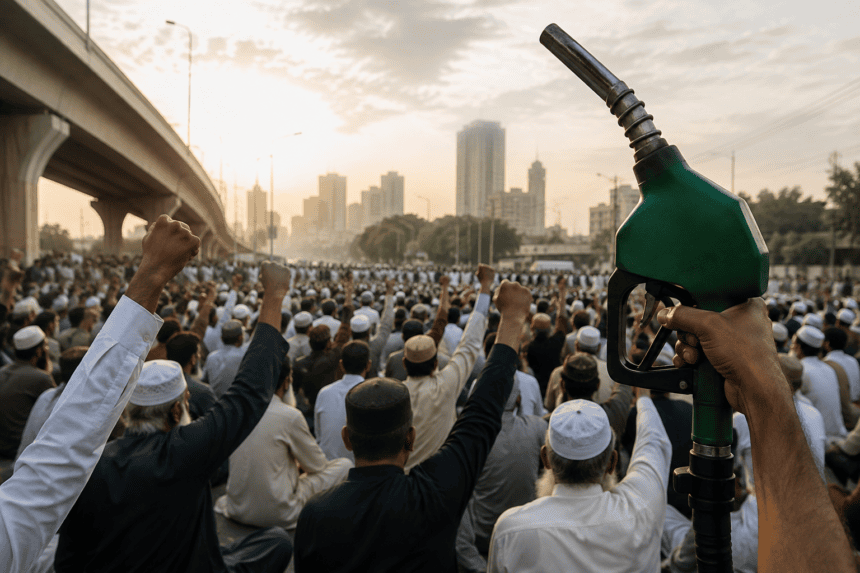
Jamaat-i-Islami (JI) chief Hafiz Naeemur Rehman has declared a nationwide protest campaign, announcing plans for 510 sit-ins across Pakistan to challenge the government’s recent hike in petroleum levies. The move marks a sharp escalation in the party’s confrontation with the ruling coalition over the rising cost of living.
The protests are set to target key intersections and city centers, aimed at paralyzing urban movement to force a rollback of the taxes. Rehman framed the decision as a final stand against policies he claims are crushing the middle and working classes.
“Enough is enough,” Rehman told a gathering of party workers in Islamabad. He signaled that the party has moved past negotiations, focusing instead on street agitation to pressure the government.
The core of the dispute lies in the government’s reliance on the petroleum development levy to meet revenue targets set by the International Monetary Fund (IMF). While the government maintains these measures are essential to stabilize the national economy and secure bailout packages, the JI leadership argues the burden is being unfairly placed on fuel consumers who are already struggling with historic inflation.
The scale of this mobilization is significant. By scheduling 510 separate sit-ins, the party is attempting a decentralized pressure tactic. This strategy aims to stretch law enforcement resources across multiple districts simultaneously, preventing the government from focusing its containment efforts on a single geographic point.
Retailers and small business owners have expressed cautious support for the protests, citing the crippling impact of high transport costs on supply chains. However, the business community remains wary of the economic disruption that prolonged sit-ins could cause, fearing further losses in an already fragile market.
The government has yet to issue a formal response to the specific protest schedule, though federal ministers have previously dismissed such demonstrations as political maneuvering. With the protest dates approaching, the administration faces a difficult choice: accommodate the rising public anger through potential price adjustments or prepare for a series of high-stakes standoffs on the streets.
For now, the Jamaat-i-Islami leadership insists there will be no retreat until the levy is withdrawn. The coming days will determine whether this campaign gains the critical mass necessary to shift government policy or stalls under the weight of logistical challenges.