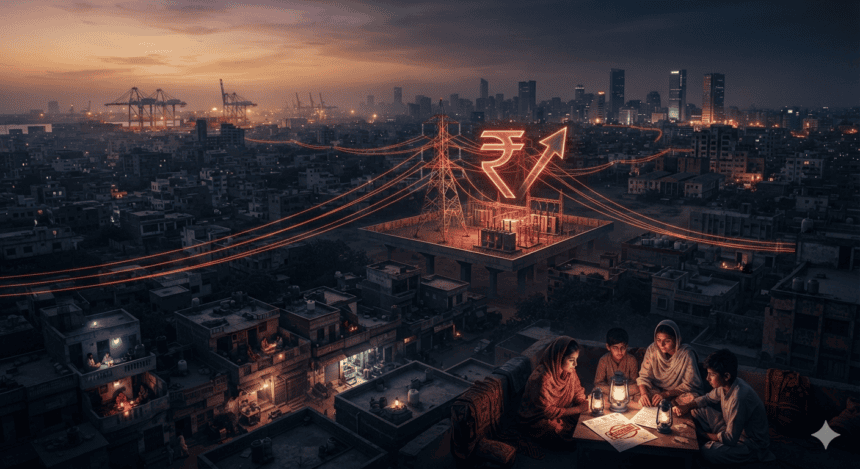
Electricity consumers across Pakistan face higher bills this month after the federal government pushed through a sharp increase in the base national tariff. The hike, finalized following pressure from international lenders to stabilize the power sector, affects every household and commercial entity from Karachi to Khyber.
For the average consumer, the math is simple but painful. Base rates have climbed by several rupees per unit, stripping away the thin margins many families held onto after months of record-high inflation. In Karachi, where K-Electric customers already grapple with frequent outages and high operational costs, the increase lands as another blow to household budgets that were already stretched to the breaking point.
The government maintains that the adjustment is unavoidable. Officials in the Power Division argue that without these price corrections, the circular debt—which has crippled the national grid for years—would become unmanageable. They point to the need for cost-recovery to keep power plants running and to satisfy the conditions set during recent loan negotiations with the International Monetary Fund.
Critics, however, see a different reality. Energy analysts argue that the burden of systemic inefficiencies, including line losses and theft, is being shifted entirely onto the shoulders of paying customers.
“We are paying for the incompetence of the distribution companies,” said an industry expert based in Islamabad. “Until they address the massive leakage in the system, no amount of tariff hikes will fix the underlying rot.”
The impact is immediate for small businesses. Shopkeepers and small manufacturers, already struggling with high interest rates and falling demand, now have to decide whether to absorb the cost or pass it on to customers. In Karachi’s industrial hubs, owners warn that the new rates could force some units to shut down entirely, threatening the livelihoods of thousands of daily-wage workers.
The government has promised that protected consumers—those using minimal electricity—will see smaller adjustments. Yet, for the middle class, the relief is nonexistent.
As the new bills land in mailboxes this week, the political cost of the decision is beginning to manifest. Public frustration is simmering in major urban centers, with consumer rights groups calling for protests against what they describe as “unjustified” pricing. With no clear plan to improve service quality alongside these hikes, the government faces a tough road ahead in defending a policy that hits the pockets of every citizen.