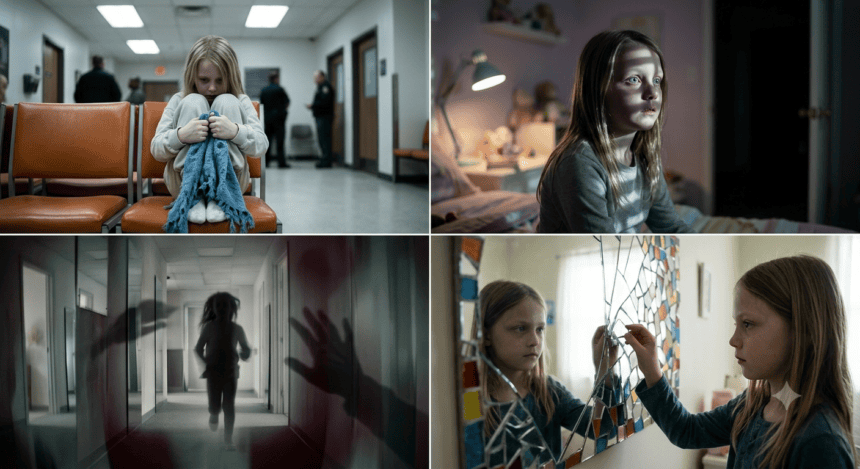
The handcuffs clicked open, and the police reunited the seven-year-old with his parents. To the public, the case was closed—a victory for law enforcement and a relief for the community. But inside the home, the real crisis had only just begun.
For many children, the end of an abduction marks the start of a silent, grueling battle with complex trauma. Experts in child psychology note that the physical safety of a child is only the first step; the brain, having spent days or weeks in a state of hyper-vigilance, does not simply “switch off” the survival response once the threat is gone.
“The nervous system stays stuck in the danger zone,” said Dr. Sarah Jenkins, a clinical psychologist specializing in pediatric trauma. “You take a child out of a cage, but they are still living in the cage in their mind. They don’t know how to trust the quiet.”
This trauma often manifests in ways parents aren’t prepared for. Night terrors, aggressive outbursts, and a sudden regression in developmental milestones—like bedwetting or separation anxiety—are common. The child, having been forced to navigate a world where adults are dangerous, often loses the fundamental belief that their caregivers can protect them.
Recovery isn’t a linear path. It’s a jagged, slow process of re-learning safety. Children who have been abducted often struggle with “hyper-arousal,” where a slammed door or a raised voice triggers a fight-or-flight response. They aren’t just reacting to the noise; they are reliving the moment they were taken.
The legal system frequently prioritizes the investigation, demanding statements and re-enactments. Mental health advocates argue this is a secondary trauma. Forcing a child to recount their ordeal to detectives or in courtrooms can solidify the memory, turning a temporary nightmare into a permanent neurological imprint.
“We focus so much on the search and the rescue that we forget the recovery,” says Mark Halloway, a former investigator turned child advocate. “We get the kid back, we take the photo, and then we leave the family to deal with the wreckage alone.”
True healing requires more than just a return to routine. It demands long-term, specialized therapy that focuses on sensory regulation rather than just talk-based sessions. The child needs to feel the safety of their environment in their body, not just hear it from their parents.
As the headlines fade and the community moves on, the child remains caught in the long shadow of the event. They are survivors of a crime, but they are also patients in a recovery process that society is rarely equipped to support. Safety is a physical state; feeling safe is a skill that many must now learn from scratch.