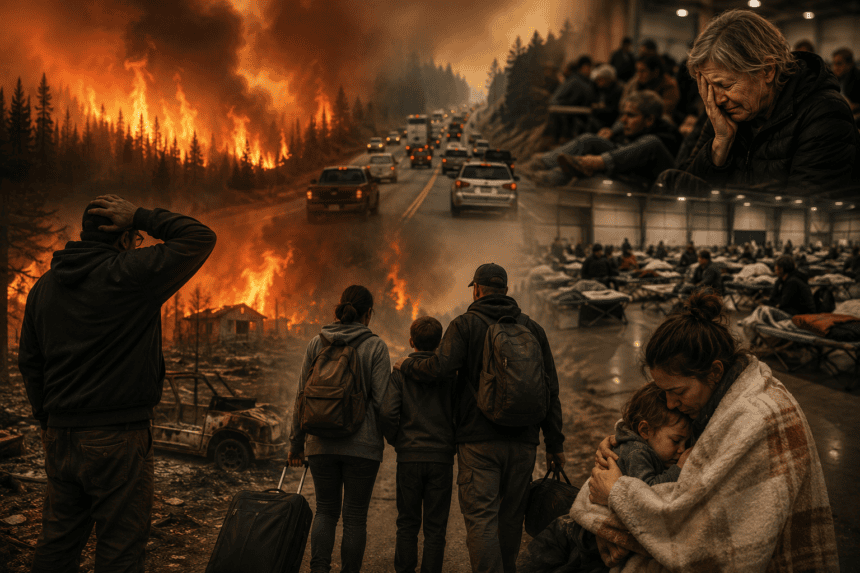
Thousands of Canadians forced from their homes by this summer’s relentless wildfire season are demanding answers. They aren’t just fighting the trauma of displacement; they’re battling a bureaucratic wall of silence and inadequate emergency support.
In towns across British Columbia and Alberta, evacuees describe a chaotic response. Families fleeing smoke and flames arrived at designated reception centers only to find locked doors, missing registration lists, and a total lack of guidance on where to sleep or how to secure food vouchers.
“We were told to go to the community center, so we drove six hours through thick haze,” said Sarah Jenkins, who evacuated from a remote interior town last week. “We got there at 2:00 a.m. and there was nobody. Just a sign on the door saying ‘Center Closed.’ We spent the night in a gas station parking lot.”
Provincial emergency management agencies maintain that their systems are designed to handle mass influxes. Officials point to pre-arranged agreements with hotels and temporary housing providers. Yet, the reality on the ground—as reported by evacuees—suggests a massive disconnect between policy and practice.
The frustration centers on three failures: broken communication channels, inconsistent financial aid, and a lack of clear timelines for returning home. Many families report that the government’s emergency hotlines are perpetually busy, leaving them to rely on social media groups for updates on evacuation orders and road closures.
Critics argue that the reliance on automated systems and centralized databases has stripped the humanity out of crisis response. When the power grid fails or cellular service drops, these digital-first strategies collapse.
“They treat us like data points, not people,” said Mark Thompson, a displaced resident currently staying in a makeshift tent city near Kamloops. “If you don’t have a smartphone or a reliable data plan, you don’t exist to them. You don’t get the texts. You don’t get the updates.”
The financial burden is compounding the stress. While some provinces offer one-time emergency payments, the cost of temporary living—inflated by the surge in demand for short-term rentals—far outpaces the aid provided. For those without insurance, the path forward is a financial cliff.
Emergency management spokespeople have promised a review of the protocols once the fire season concludes. For now, they’re urging patience as they manage a record-breaking number of active blazes.
Patience, however, is running out. As the fire season drags on, the anger among those in temporary shelters is hardening into a demand for structural reform. They aren’t just waiting for the smoke to clear; they’re waiting for a government that shows up before the crisis peaks.