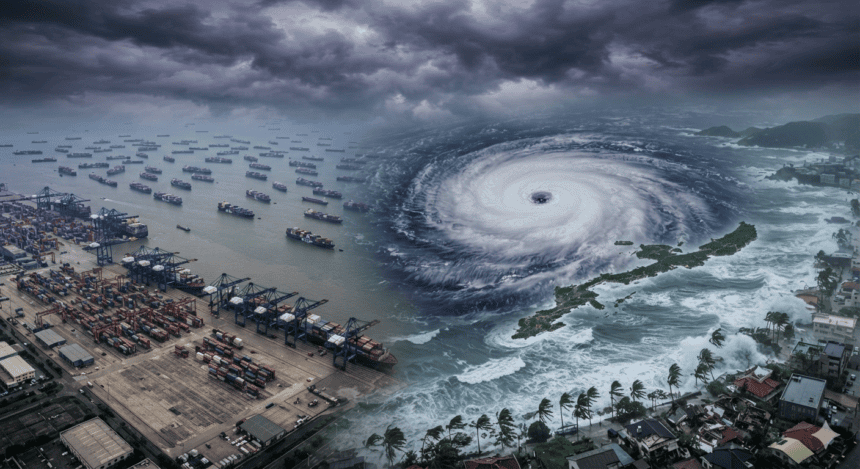
OKINAWA — Typhoon Dolphin battered Japan’s southern islands Tuesday, packing sustained winds of 160 kilometers per hour and forcing a complete lockdown across Okinawa. The storm, now churning northwest toward the Chinese mainland, has already prompted authorities in Shanghai and Ningbo to shutter major shipping terminals.
The impact on Okinawa was immediate. Power grids failed across the main island by dawn, leaving at least 85,000 households in the dark. Local emergency services have received dozens of reports involving collapsed roofs and downed power lines, though officials confirmed there are no immediate reports of fatalities.
“The wind intensity is unlike anything we’ve tracked in this sector over the past decade,” said Kenji Sato, a senior forecaster with the Japan Meteorological Agency. “It’s not just the speed; it’s the sheer volume of water dumping on the islands that poses the real threat.”
Across the East China Sea, the response is frantic. Chinese maritime authorities halted operations at the Port of Ningbo-Zhoushan—the world’s busiest port by cargo tonnage—effective midnight Tuesday. Hundreds of vessels have been ordered to seek shelter in designated anchorages as the storm’s path narrows toward the Yangtze River Delta.
The economic ripple effects are already forming. Global supply chains, still recovering from recent regional bottlenecks, are bracing for a multi-day shutdown. Shipping insurers have issued warnings that delays at major Chinese hubs could impact delivery timelines for consumer electronics and automotive parts well into next month.
Meteorologists expect the storm to lose some intensity as it brushes against cooler waters near the Chinese coast, but they aren’t ruling out a direct hit on heavily populated urban centers. Residents in Shanghai have begun boarding up windows and stocking emergency supplies, moving to higher ground as the city prepares for a potential storm surge.
For the people of Okinawa, the recovery phase is just beginning. Emergency crews are waiting for wind speeds to drop below 60 kilometers per hour before they can safely clear debris from the main highways. Until then, the islands remain effectively severed from the mainland.