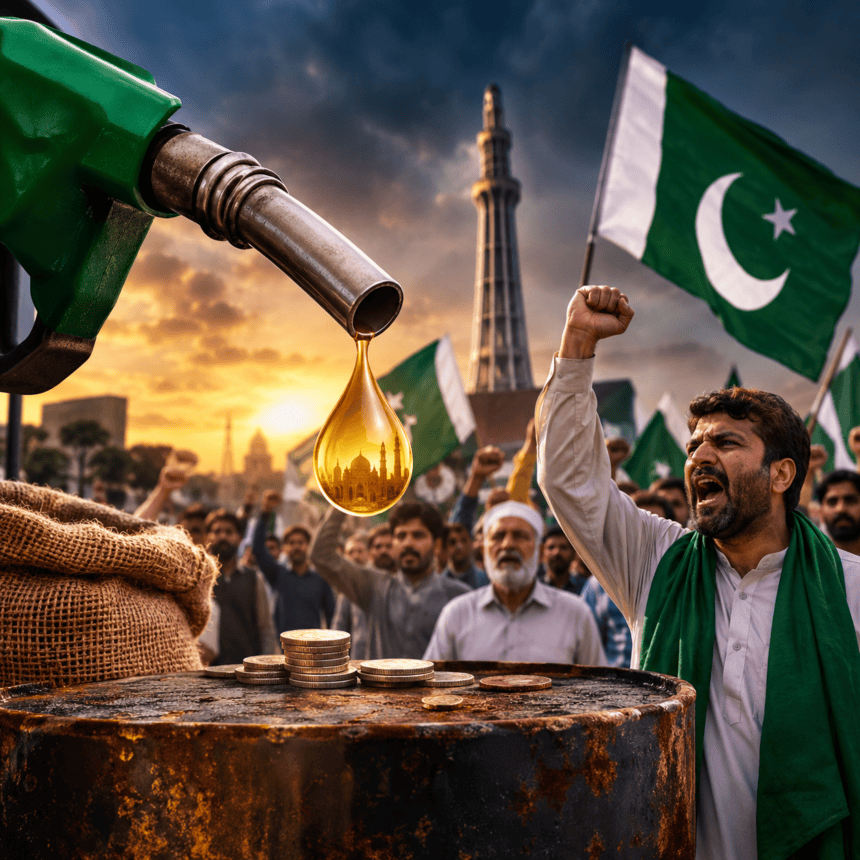
Jamaat-e-Islami (JI) is taking its grievances to the streets again. The party announced a series of sit-ins scheduled for August 16 across provincial capitals, directly challenging the government’s recent decision to hike the petroleum development levy.
The protest marks a sharp escalation from the party’s recent “Haq Do Awam Ko” movement. By targeting provincial headquarters, JI leadership intends to paralyze key administrative centers, forcing the federal government to confront the backlash over soaring energy costs and tax burdens.
JI Emir Hafiz Naeemur Rehman framed the move as a breaking point for the middle class. “We aren’t asking for concessions; we’re demanding a rollback of the policies crushing the taxpayer,” he told reporters at a press conference on Tuesday. He dismissed the government’s recent inflation figures as “statistical manipulation,” arguing that the reality on the ground is a total erosion of purchasing power.
The party’s strategy relies on more than just street presence. JI strategists are betting that by coordinating sit-ins simultaneously in Karachi, Lahore, Peshawar, and Quetta, they can create a logistical nightmare for the state—and a political crisis the ruling coalition cannot simply ignore.
For the government, the timing is precarious. With the IMF loan program under scrutiny and public dissatisfaction simmering, any disruption to major urban centers adds pressure on an already fragile economic narrative. The petroleum levy, intended to bridge revenue gaps, has become a lightning rod for opposition parties looking to capitalize on public anger.
Despite the rhetoric, the government has shown no sign of budging on the levy. Finance ministry officials maintain that the tax is a structural necessity to meet revenue targets agreed upon with international lenders. They argue that rolling back these measures would jeopardize the country’s broader stabilization efforts.
JI’s leadership remains unmoved by these warnings. As the August 16 deadline approaches, the party is moving to mobilize its youth wings and trade union allies, signaling that this round of protests is intended to be far more disruptive than previous demonstrations.
Whether this move triggers a policy shift or merely deepens the standoff remains the central question. For now, the streets of the provincial capitals are set to become the primary battleground for the country’s escalating economic crisis.