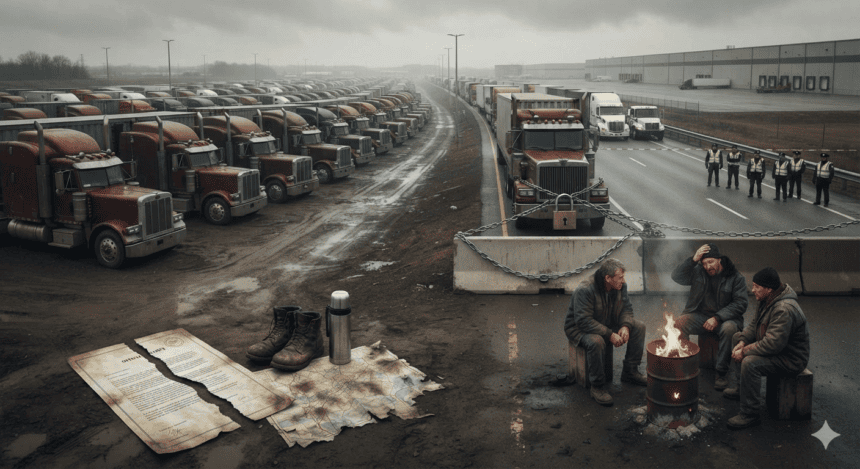
The nationwide strike by goods transporters entered its third day today after negotiations with the government ended in a stalemate. Thousands of trucks remain parked across major trade hubs, halting the movement of essential commodities and threatening a supply chain crisis.
The deadlock centers on the government’s refusal to roll back recent hikes in withholding taxes and axle load regulations. Transporter unions argue these levies are unsustainable, effectively pushing small-scale operators out of business while increasing the cost of goods for the average consumer.
“We aren’t looking for a confrontation, but we can’t operate at a loss,” said Mir Muhammad, a spokesperson for the All Pakistan Goods Transporters Association. He confirmed that the latest meeting with federal ministers provided no concrete relief, leaving the union with “no choice but to keep the wheels stopped.”
Supply chains are already showing signs of strain. Wholesale markets in major cities reported a 30% drop in vegetable and fruit arrivals this morning. Retailers are bracing for price hikes as fuel costs and stagnant inventory begin to pinch profit margins.
Government officials maintain that the tax measures are essential to broaden the national tax base and stabilize the economy. They have labeled the strike “unjustified,” urging union leaders to return to the table without holding the public’s food supply hostage.
Despite the government’s rhetoric, there is little sign of movement. The transporters have signaled they are prepared for a long haul, with plans to expand the protest to include port blockades if their demands aren’t met by the weekend.
As of this afternoon, the Ministry of Communications has not announced a follow-up meeting. With the country’s main arteries clogged and no compromise in sight, the cost of this standoff is shifting rapidly from the balance sheets of transport firms to the wallets of everyday citizens.