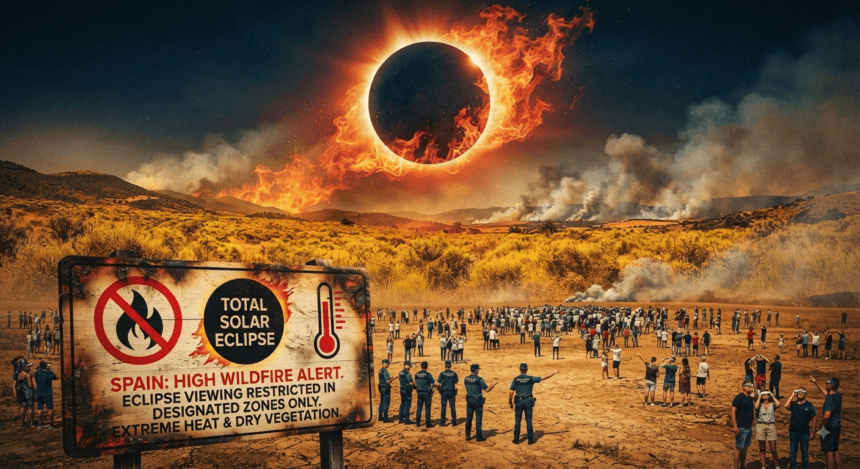
Spain’s Ministry of Environment issued a stern directive this week: if you’re planning to watch the upcoming solar eclipse, keep your eyes on the horizon and your gear away from dry brush.
With temperatures across the Iberian Peninsula trending above average for this time of year, officials are bracing for a high risk of wildfires. They aren’t just worried about the heat—they’re worried about the equipment.
High-powered telescopes, binoculars, and camera lenses focused on the sun can inadvertently turn into high-intensity magnifying glasses. When left unattended or placed on dry grass, these lenses can focus sunlight into a pinpoint beam hot enough to ignite vegetation in seconds.
“The equipment meant to capture the sky is a potential spark for the ground,” said a spokesperson for Spain’s National Fire Service. “We’ve seen it before. A momentary lapse in judgment is all it takes to turn a celestial event into a local emergency.”
The warning comes as the country enters a critical fire-prevention window. Regions like Andalusia and Extremadura are already reporting moisture levels in the soil well below normal, leaving the landscape primed for ignition.
Fire crews have been placed on high alert for the day of the eclipse. They aren’t just monitoring the usual fire-prone areas; they are deploying patrols to known public viewing spots. Their mandate is simple: stop the fires before they start.
Officials are urging the public to follow three basic rules: stay on cleared, paved surfaces; never place optical gear directly on the ground; and ensure that any cigarette butts or heat sources are fully extinguished before heading home.
For those heading into the countryside to get a clearer view, the message from the government is clear: enjoy the eclipse, but don’t leave a scar on the landscape that will take years to heal.