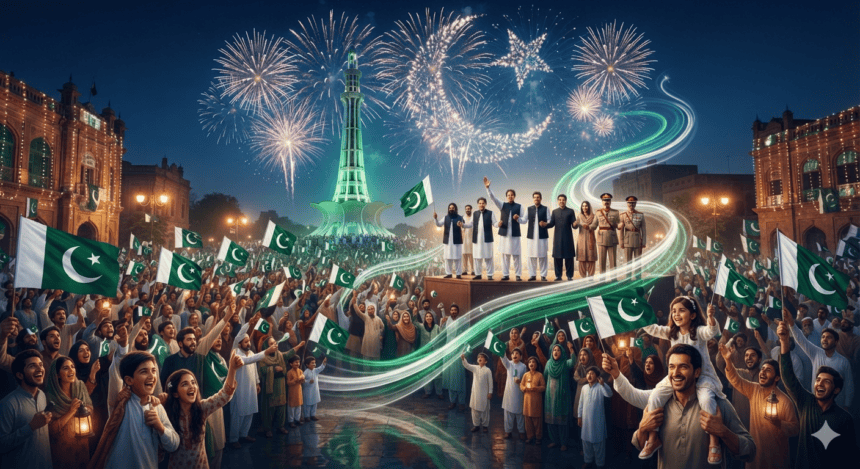
Pakistan marked its 78th Independence Day Wednesday with the customary pomp—flag-hoisting ceremonies, military parades, and speeches from the country’s top leadership. Yet, behind the official rhetoric of national unity, the mood across the country remains defined by a grinding economic crisis that has left little room for celebration.
President Asif Ali Zardari and Prime Minister Shehbaz Sharif used their addresses to pivot toward the familiar promise of structural reform. They called for political stability as a prerequisite for economic recovery, urging the nation to set aside internal discord.
“The path to prosperity is paved with discipline and unity,” the Prime Minister told a ceremony in Islamabad. He pointed to the government’s recent efforts to broaden the tax base as the necessary medicine for a struggling treasury.
But for the average citizen, the distance between these podium promises and the reality of the grocery store is widening. Inflation remains stubbornly high, and the tax hikes referenced by the Prime Minister have squeezed the middle class and low-income households alike. The government’s attempt to project a vision of progress faces a skeptical public, many of whom are more concerned with rising electricity bills than national day rhetoric.
Political analysts argue that the leadership’s focus on “unity” often functions as a shield against legitimate dissent. While the government frames opposition as an obstacle to progress, critics suggest the stagnation stems from a failure to diversify the economy and a reliance on external bailouts. The latest IMF loan negotiations, which remain ongoing, underscore a dependency that no amount of Independence Day optimism can mask.
The military establishment, too, reiterated its commitment to national security, emphasizing that stability is the bedrock of the state. In his message, the Chief of Army Staff highlighted the role of the armed forces in countering internal and external threats, framing the country’s challenges as a test of national resolve.
Despite the official narrative of a nation on the mend, the streets tell a different story. Shops in major cities remained quiet, and the usual festive fervor was muted by the oppressive cost of living.
The government’s call for reform is a necessary acknowledgment of the state’s fragility. Whether that call results in tangible change or remains another cycle of political theatre is the question that will define the coming year. Until the economic burden eases, the gap between the state’s vision and the citizen’s reality will only grow wider.