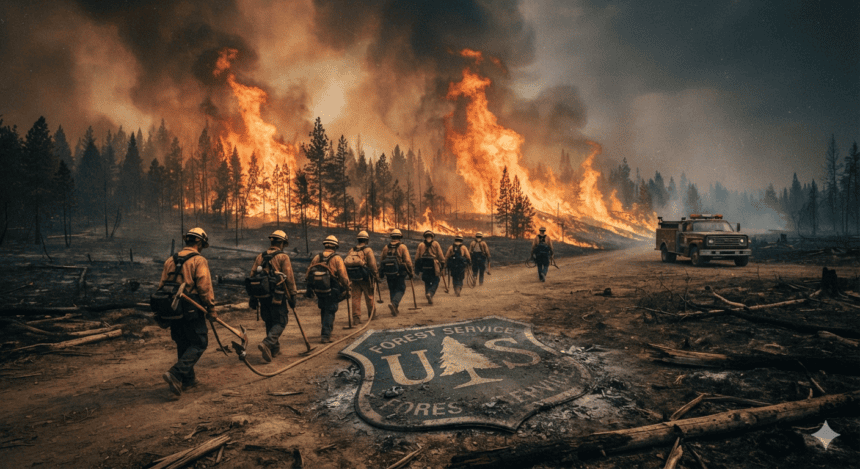
The U.S. Forest Service is heading into peak wildfire season with hundreds of vacant positions, a direct result of federal budget constraints that have stripped crews of the personnel needed to manage increasingly volatile blazes.
For years, the agency relied on a sprawling workforce to thin forests and maintain containment lines. Now, those ranks are thinning. Officials acknowledge that the shortfall isn’t just a matter of logistics; it’s a direct hit to the agency’s ability to respond when a spark hits dry timber.
The strategy of “aggressive suppression”—a hallmark of federal firefighting—is buckling under the weight of attrition. When a fire breaks out in remote terrain, the difference between a controlled burn and a catastrophic inferno often comes down to the first 24 hours. Without enough boots on the ground, that window is closing faster than it used to.
“We are being asked to do more with significantly less,” one veteran fire supervisor said on the condition of anonymity, fearing professional reprisal. “You can have all the air support in the world, but if you don’t have enough people on the ground to cut the line, the fire goes where it wants.”
The math is stark. Recruitment numbers have failed to keep pace with retirements, and a hiring freeze—implemented to balance federal accounts—has effectively locked the gate. Many seasonal firefighters, the backbone of the summer response, have opted for private sector work or state-level agencies that offer better pay and more predictable schedules.
Lawmakers in Washington remain divided. Some argue that the agency’s budget, while constrained, is sufficient if managed with more efficiency. Others, particularly those representing districts in the American West, warn that the current staffing levels are a recipe for disaster. They point to the devastating 2023 season, where understaffed crews struggled to keep pace with rapid-fire ignitions, as a preview of what’s to come.
The reliance on “surge capacity”—moving crews from across the country to active fire zones—is also fraying. When every region is short-staffed, there is no one left to move. The safety net has essentially been removed.
As temperatures climb and forest floors turn into tinderboxes, the Forest Service is left betting on a quiet summer. It’s a risky gamble—one that leaves communities in the path of potential fires waiting for a response that may arrive hours too late.