Bones may look hard and lifeless, but they are actually living tissues that constantly change and repair themselves.
When a bone breaks, the body immediately begins a carefully coordinated healing process. Blood vessels, immune cells, bone-forming cells, cartilage, and minerals all contribute to rebuilding the damaged area.
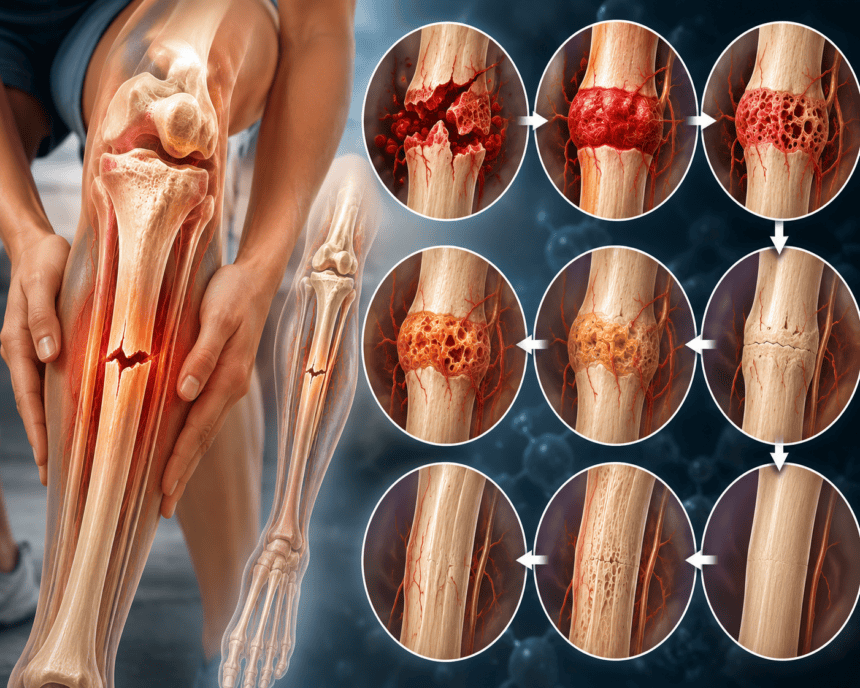
Bone healing generally occurs through several overlapping stages


Stage One: Bleeding and Inflammation
Immediately after a fracture, small blood vessels inside and around the bone can break.
Blood collects around the injury, forming a fracture hematoma.
Although bleeding sounds harmful, this early response is an important part of healing. The blood clot creates a temporary environment where repair can begin.
Immune cells also move into the area.
They remove damaged tissue and release chemical signals that attract other cells involved in repair.
Stage Two: A Temporary Repair Structure Forms
After the initial inflammatory stage, the body begins creating a temporary structure around the broken bone.
Cells called fibroblasts and other repair cells produce connective tissue, while cartilage can form around the fracture.
This creates what is often called a soft callus.
The soft callus helps stabilize the area while the body prepares to build stronger bone.
Stage Three: New Bone Develops
Bone-forming cells called osteoblasts become highly active.
They produce new bone tissue around the fracture.
The soft callus gradually becomes harder as mineralized bone develops.
This is known as a hard callus.
At this stage, the fracture is becoming stronger, but the new bone is not yet as organized or mechanically efficient as normal mature bone.
Stage Four: Bone Remodeling
The final stage can continue for months or even longer.
The body reshapes the newly formed bone through a process called remodeling.
Two important types of bone cells participate:
- Osteoblasts build bone.
- Osteoclasts remove and reshape bone.
Together, they gradually reorganize the repaired area.
The bone becomes more closely adapted to the forces placed on it.
Why Does a Broken Bone Need to Be Immobilized?
A fracture generally needs enough stability for the new tissue to connect the broken sections.
Depending on the type and location of the fracture, doctors may use a cast, splint, brace, or surgery to keep the bone properly aligned.
If the broken pieces move excessively, healing may be delayed or the bone may heal incorrectly.
Nutrition Matters Too
Bone repair requires energy and nutrients.
Protein provides building blocks for tissues, while minerals such as calcium and phosphorus contribute to bone structure.
Vitamin D helps the body regulate calcium and supports healthy bones.
A balanced diet can therefore support the body’s normal healing processes.
Why Do Some Fractures Take Longer to Heal?
Healing time varies depending on the bone, fracture type, blood supply, age, general health, nutrition, smoking status, and other factors.
Some fractures have excellent blood flow and heal relatively quickly. Others, especially in areas with limited blood supply, may take considerably longer.
Severe fractures may also require specialized treatment.
The Amazing Part of Bone Healing
Unlike many tissues, bone has a remarkable ability to repair itself by creating new bone.
The body does not simply cover the fracture with scar tissue. Instead, it builds new mineralized tissue and gradually remodels it.
That makes bone one of the body’s most fascinating examples of natural repair.