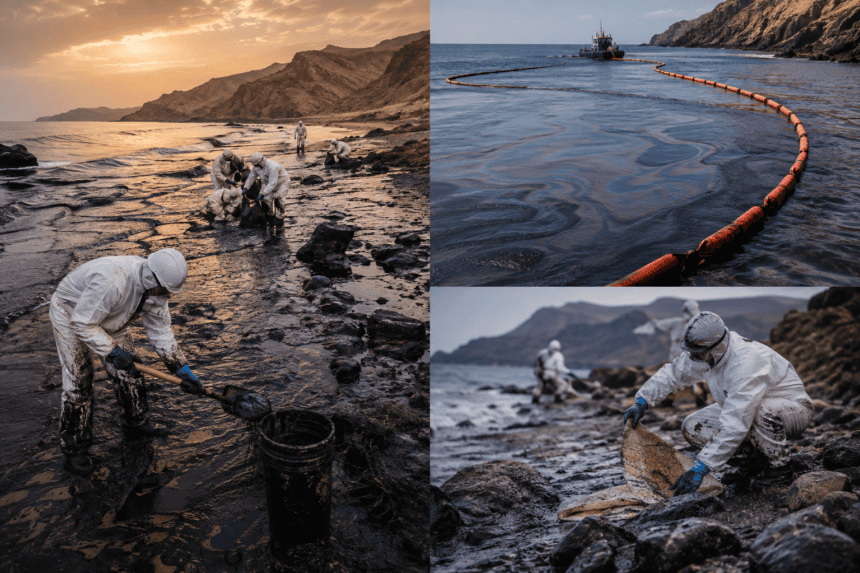
Omani environmental authorities have launched an emergency cleanup operation after a significant oil spill, linked to a Russian-flagged tanker, washed ashore along the Sultanate’s northern coastline Tuesday.
The slick, spotted near the port city of Sohar, forced the immediate closure of several public beaches and halted local fishing operations. Officials from the Ministry of Environment and Climate Affairs confirmed the spill originated from a vessel currently under investigation for illegal discharge in regional waters.
The environmental stakes are high. The affected area includes critical nesting grounds for endangered green sea turtles and delicate mangrove ecosystems that serve as the backbone for local biodiversity. By Tuesday evening, specialized cleanup crews were deploying containment booms to prevent the sludge from spreading further into the sensitive intertidal zones.
“We are dealing with a volatile situation,” said a senior official at the regional port authority. “The currents are pushing the oil toward the mangroves, and if it settles in the sediment, the damage could take years to reverse.”
The vessel in question, identified by satellite tracking data as a medium-range tanker, reportedly attempted to bypass port regulations before the leak was detected. While the ship’s captain initially denied responsibility, maritime investigators are now reviewing the vessel’s logs and hold capacity.
For local fishermen, the spill is a direct hit to their livelihood. Markets in the Batinah region, which rely on daily catches from these waters, saw prices spike as supplies plummeted. Many small-scale boat owners have been ordered to dock their vessels until the water quality is deemed safe.
Authorities have promised a full investigation, with the Ministry of Environment signaling that heavy fines—and potentially international legal action—will follow if the tanker is found to have violated maritime safety protocols.
Cleanup crews expect to spend the next 72 hours scrubbing the shoreline, but the long-term impact on the region’s marine life remains the primary concern for local conservationists.