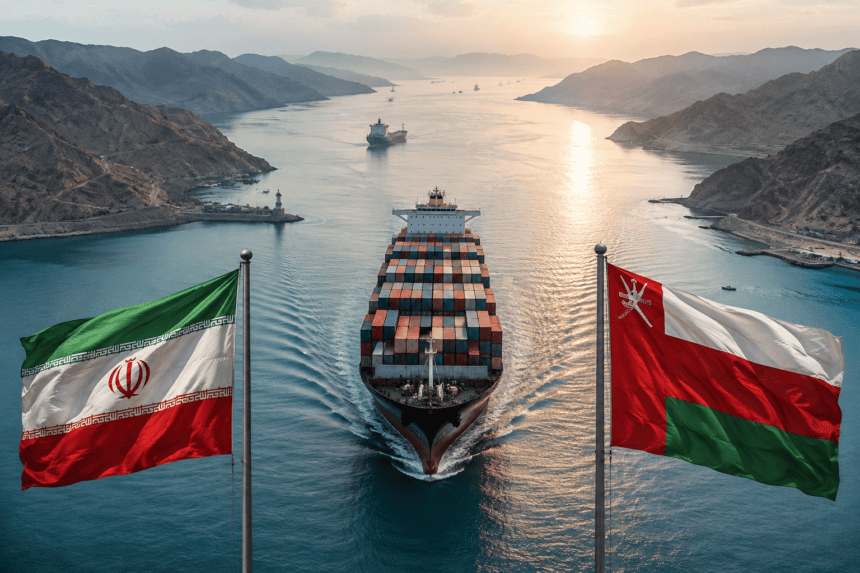
Tehran and Muscat have finalized a maritime agreement aimed at regulating shipping traffic through the Strait of Hormuz. The deal follows months of quiet diplomatic maneuvering between the two neighbors, seeking to reduce friction in one of the world’s most volatile energy corridors.
The agreement, confirmed by Iran’s Ministry of Roads and Urban Development, establishes a joint framework for vessel coordination and search-and-rescue operations. While details on specific navigation protocols remain sparse, officials describe the move as a necessary step to prevent “unintended escalation” in waters where Iranian naval forces and Western tankers frequently cross paths.
For the global energy market, the stakes are immediate. Roughly 20% of the world’s daily oil consumption passes through this narrow choke point. Even minor disruptions here trigger insurance spikes and immediate price volatility. By securing Oman’s cooperation—a regional mediator that maintains functional ties with both Tehran and Washington—Iran is signaling a desire to stabilize the flow of its own exports while projecting a more predictable image to international shipping insurers.
“This is about predictability,” said a regional maritime analyst based in Dubai. “Iran isn’t necessarily ceding control, but they are formalizing the rules of the road. It makes it harder for incidents to spiral into a broader conflict when there’s a direct line between the Iranian and Omani coast guards.”
The timing is telling. The pact arrives as tensions simmer over Western sanctions and the presence of foreign warships in the Persian Gulf. By bringing Muscat into the fold, Tehran creates a buffer. Oman has long positioned itself as the “Switzerland of the Middle East,” and its involvement provides a level of diplomatic legitimacy that Iran—often isolated on the global stage—rarely secures for its naval activities.
Washington has yet to issue a formal reaction. However, maritime security experts note that the U.S. Navy’s Fifth Fleet, based in Bahrain, will likely view the development with skepticism. The Pentagon has historically pushed for an internationalized approach to Strait security, often rejecting bilateral deals that might exclude Western oversight.
Whether the agreement translates into actual on-the-water calm remains the core question. Shipping companies are waiting to see if the deal results in fewer interceptions and less aggressive maneuvers by the Islamic Revolutionary Guard Corps (IRGC) Navy.
Until the first joint patrols begin or a new communication protocol is tested during a live incident, the shipping industry remains in a “wait and see” mode. For now, the agreement stands as a rare piece of regional cooperation—a small, calculated move to keep the tankers moving in an increasingly crowded sea.