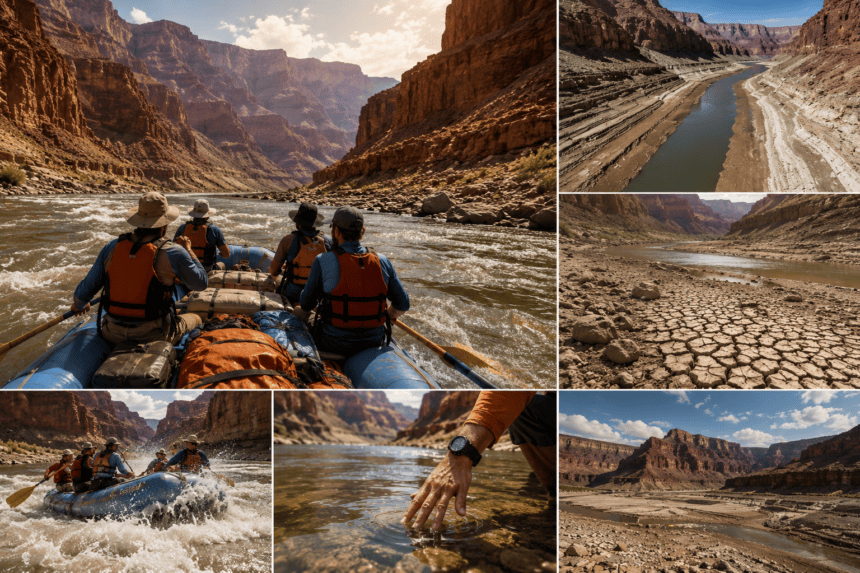
The Colorado River is shrinking. For the thousands of rafters who navigate the Grand Canyon each year, this isn’t just an abstract climate statistic—it’s a daily confrontation with exposed riverbeds, unnavigable rapids, and a rapidly changing landscape.
Water levels at Lake Powell and Lake Mead have hit historic lows, forcing federal officials to slash water releases from the Glen Canyon Dam. The result for the river below? A slower, warmer, and increasingly unpredictable path through one of the world’s most iconic canyons.
Outfitter logs from this past season show a distinct shift. Guides are spending more time scouting rapids that were once “runnable” with eyes closed. Now, hidden boulders—previously buried under feet of rushing water—threaten to pin rafts or tear through hulls. It’s a game of inches, and the margin for error is razor-thin.
“You’re reading the water differently every single morning,” said Marcus Thorne, a veteran guide who has spent two decades on the river. “The rapids aren’t just smaller; they’re weirder. Rocks that used to be deep-water hazards are now center-channel obstacles. You can’t rely on the maps from five years ago.”
The ecological toll is just as visible as the navigation hazards. As the river slows, it loses the capacity to flush out sediment. Sandbars—the lifeblood of the canyon’s camping culture—are changing. Some are being swallowed by encroaching vegetation, while others are eroding away because the high-flow “pulse” releases meant to replenish them are being held back to conserve reservoir levels.
Climate scientists point to a twenty-year “megadrought” exacerbated by rising temperatures in the Upper Basin. The math is brutal: there is simply less snowmelt reaching the river. For the 40 million people who rely on the Colorado for drinking water and agriculture, the river is a lifeline. For those on the river, it’s a bellwether for the American West.
The National Park Service has begun adjusting launch schedules and limiting group sizes to mitigate the impact of human traffic on a river that has less capacity to dilute waste and sediment. These aren’t just administrative hurdles; they are acknowledgments that the river can no longer sustain the same level of intensity it did even a decade ago.
As rafters pull their boats onto the shore each night, the quiet is heavier than it used to be. The roar of the rapids is fading, replaced by the sound of a river struggling to maintain its course. Whether the Colorado can recover its former strength depends on a winter snowpack that has become increasingly fickle—and a water management policy that is running out of ways to hide the truth.
The canyon remains, but the river that carved it is slowly losing its grip.