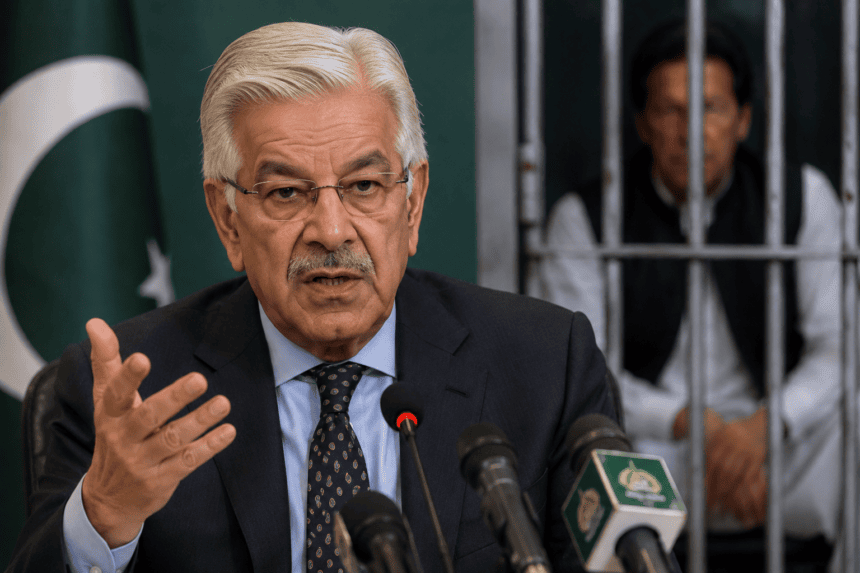
Defense Minister Khawaja Asif has escalated his rhetoric against the Pakistan Tehreek-e-Insaf (PTI), claiming the party is desperately lobbying for a deal—an “NRO”—to secure the release of its incarcerated founder, Imran Khan.
The minister’s comments, delivered during a recent media interaction, suggest that despite PTI’s public stance of defiance, behind-the-scenes efforts to negotiate a path out of prison for Khan have reached a fever pitch. Asif stopped short of naming specific intermediaries, yet his framing of the situation signals that the ruling coalition remains unmoved by the pressure campaign currently being waged by the opposition.
For the government, the messaging is clear: there is no back-channel. By framing PTI’s agitation as a calculated attempt to extract a political concession, Asif is aiming to delegitimize the party’s ongoing street protests. He maintains that legal cases against the former prime minister must reach their logical conclusion in the courts, rather than being settled through political compromise.
The term “NRO”—referencing the National Reconciliation Ordinance issued in 2007—has become a potent political slur in Pakistan. It implies a corrupt bargain where those in power trade legal immunity for political stability. PTI, for its part, has consistently denied seeking any such arrangement, maintaining that their protests are rooted in a demand for constitutional rule and the restoration of a stolen mandate.
The timing of Asif’s statement is strategic. As PTI attempts to mobilize its base across Punjab and Khyber Pakhtunkhwa, the government is looking to frame the movement not as a struggle for democracy, but as a narrow, self-serving quest for the release of a single individual.
Whether these claims of a “desperate” search for a deal hold weight or are merely a tactic to fracture PTI’s resolve remains the central question. As the legal battles surrounding the founder of PTI continue to grind forward, the political divide in Islamabad shows no signs of narrowing.
Asif remains firm, insisting that the law will take its course, leaving PTI with few options beyond continuing its high-stakes standoff with the state.