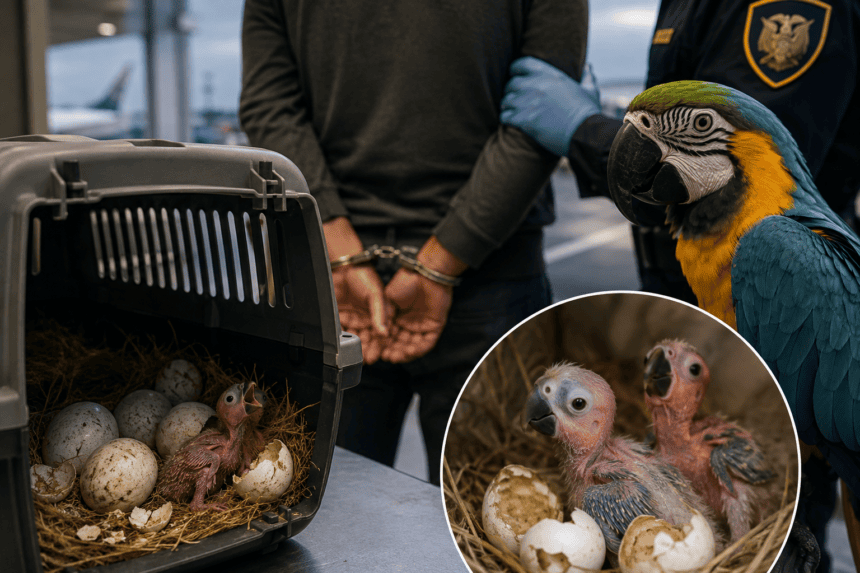
JOHANNESBURG — A clutch of parrot eggs seized from a suspected wildlife smuggler at OR Tambo International Airport has successfully hatched, marking a rare success for wildlife authorities in South Africa.
The suspect, a Thai national, was intercepted by customs officials last month while attempting to board a flight to Bangkok. Security scanners flagged suspicious items in his luggage, leading to the discovery of 18 parrot eggs hidden inside a concealed compartment.
The eggs were immediately transferred to a specialized incubation facility. Experts initially gave the clutch low odds of survival, citing the stress of the transit and the precarious conditions inside the smuggler’s bag.
“The survival rate for trafficked eggs is usually abysmal,” said a spokesperson for the wildlife rescue center handling the recovery. “We weren’t just fighting the trauma of the journey; we were fighting the clock.”
Against the odds, the first chicks began to break through their shells late last week. Officials confirmed that 12 of the 18 eggs have now hatched, with the chicks currently under round-the-clock care. Veterinarians are monitoring their development to determine the specific species, though preliminary assessments suggest they are high-value exotic parrots often targeted by the illegal pet trade.
Wildlife crime remains a persistent challenge at South Africa’s primary aviation hub. Syndicates frequently use the airport as a transit point for moving endangered species from across Africa into the lucrative markets of Southeast Asia.
The suspect remains in custody. He faces charges under the National Environmental Management: Biodiversity Act, which carries heavy penalties for the illegal possession and transport of protected wildlife.
For the chicks, the focus has shifted from survival to eventual rehabilitation. While they are thriving in a climate-controlled environment, they face a long path before they can be considered healthy enough for potential release or long-term sanctuary placement.
The successful hatching provides a rare victory for conservationists, but it serves as a stark reminder of the sheer volume of wildlife being siphoned out of Africa in the shadows of international travel.