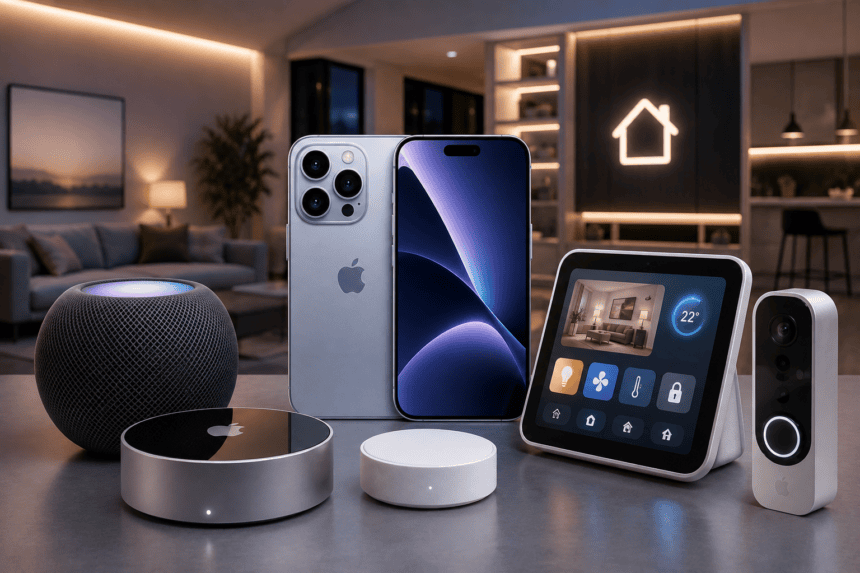
Apple is preparing to anchor its next hardware cycle with a significant push into the smart home market, positioning a new line of interconnected devices to debut alongside the iPhone 18. The move signals a pivot from peripheral accessories to a centralized ecosystem strategy, aiming to reclaim territory lost to Amazon’s Echo and Google’s Nest.
Supply chain insiders report that Cupertino is finalizing two distinct devices: a wall-mounted command center for home automation and a high-end AI-driven security hub. Both units are designed to function as the “brain” of the home, utilizing the next-generation A-series chips expected to power the iPhone 18.
The stakes for Apple are high. While the company has long offered the HomePod and Apple TV, it has struggled to gain the market share enjoyed by its rivals. By bundling the release with its flagship handset, Apple hopes to leverage the iPhone’s massive user base to force a shift in home automation standards.
“They’re not just selling a speaker or a screen anymore,” said a tech analyst familiar with the company’s roadmap. “They’re selling a proprietary layer that sits between your phone and your front door. If it works, you’re locked in for another decade.”
The new command center is expected to feature a near-edge-to-edge display, mirroring the design language of the iPhone 18’s Pro models. It will rely heavily on Apple Intelligence, the company’s revamped AI suite, to manage tasks ranging from climate control to biometric security access.
Crucially, these devices will support the Matter standard, an attempt to ensure compatibility with third-party hardware. However, internal documents suggest that advanced features—such as deep neural processing for home security and automated scene transitions—will remain exclusive to devices within the Apple ecosystem.
The strategy marks a departure from the company’s recent focus on services. With hardware growth slowing in saturated markets, Apple is betting that the home is the next battleground for consumer loyalty.
Whether these devices can overcome the premium pricing barrier remains the primary question for investors. As the launch date approaches, the company faces the challenge of convincing users that a dedicated smart home hub is a necessity rather than a luxury accessory.
For now, the focus remains on the integration. If the iPhone 18 acts as the remote, these new hubs are intended to be the permanent architecture of the modern home.