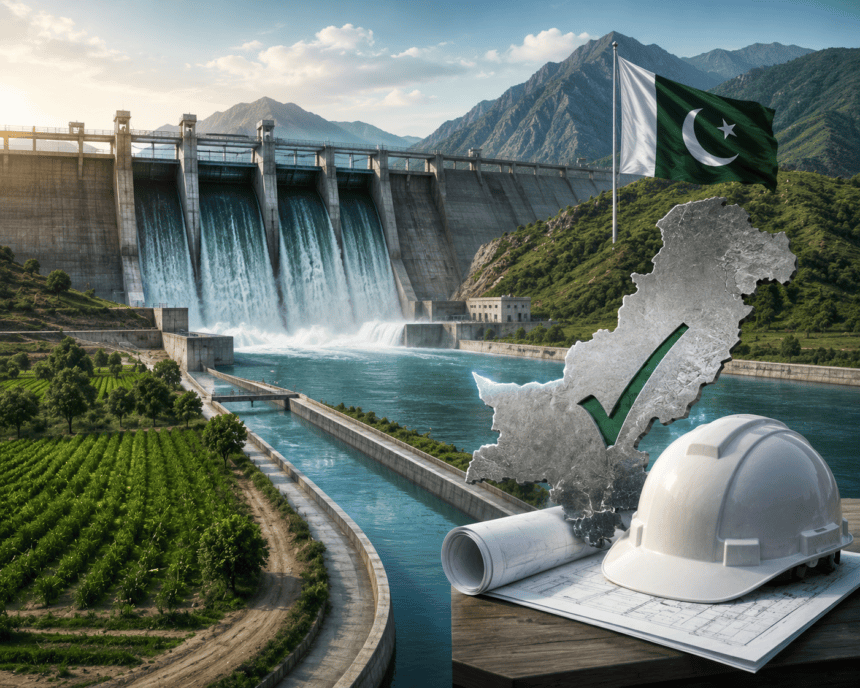
The federal government has sanctioned over Rs7 billion to accelerate the long-delayed K-IV water supply project. The funding, approved by the Executive Committee of the National Economic Council (ECNEC), aims to finally bridge the massive supply-demand gap in Karachi, where residents have faced chronic shortages for decades.
This latest injection of capital is earmarked for the completion of critical infrastructure, including the main canal and pumping stations. Planners hope this infusion will bypass the administrative gridlock that has stalled the project through multiple federal and provincial administrations.
Karachi requires roughly 1,200 million gallons of water daily (MGD) to function. The city currently receives less than half of that from the Indus River through existing lines. The K-IV project is designed to bring an additional 260 MGD to the city, providing a vital lifeline for millions of residents in the country’s industrial hub.
The project has been a cautionary tale of bureaucratic inertia. Originally conceived over a decade ago, it has been plagued by design revisions, funding disputes between the federal and Sindh governments, and shifting project oversight. Every year of delay has pushed the project’s cost into the billions, turning a once-affordable utility scheme into a massive fiscal burden.
Federal planning officials stated that this tranche of funding comes with strict timelines. The Ministry of Planning is now coordinating with the Frontier Works Organization (FWO) to ensure the construction pace matches the released funds.
Despite the approval, skepticism remains among urban planners. Past promises of “fast-tracking” K-IV have repeatedly hit roadblocks, leaving the city’s water tankers—a multi-billion rupee informal industry—as the primary, and expensive, source for many households.
For the average Karachiite, this Rs7 billion approval is just another number on a spreadsheet until the water actually hits the taps. The real test for the government won’t be the funding announcement, but whether they can keep the construction crews working through the upcoming monsoon season.