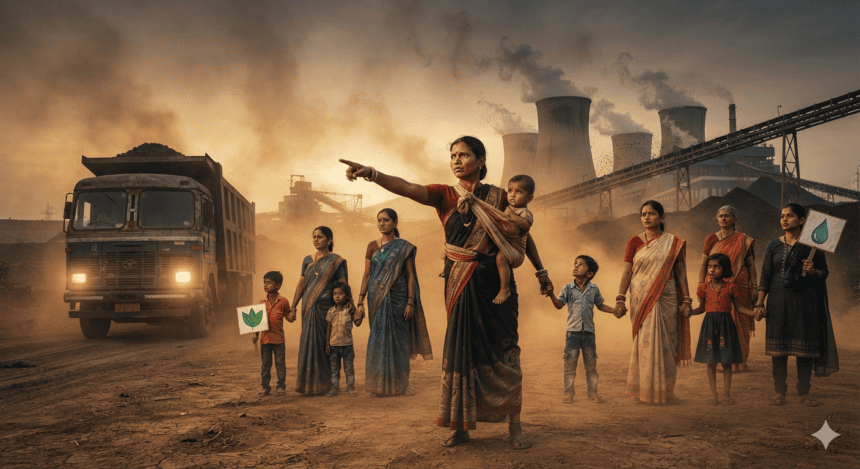
MAHA, India — A group of mothers in the Mahan forest region has launched a fresh protest against the expansion of coal mining operations, claiming the industrial encroachment is poisoning their water and destroying the local ecosystem.
The movement, led by women from the local Adivasi communities, reached a breaking point this week as heavy machinery moved into areas previously designated as protected community forest land. For these families, the forest isn’t just landscape; it’s their primary source of food, medicine, and clean water.
“They talk about national energy security, but what about our security?” said Sunita Devi, a local community leader who has been organizing the demonstrations. “Our children are drinking water that tastes like metal, and the air is thick with coal dust. We aren’t moving.”
The mining project, currently backed by state-level industrial development corporations, aims to tap into the coal-rich seams beneath the dense canopy. Officials argue the expansion is necessary to meet the country’s rising power demand. They claim the project includes “mitigation measures” to handle waste and dust, but residents on the ground say those measures are non-existent.
The conflict pits a massive industrial agenda against the basic survival of the village. For the past decade, this region has been a flashpoint for environmental activism, with previous phases of mining already displacing dozens of families. The local health centers report a steady rise in respiratory issues, which doctors in the nearby district hospital privately link to the increased particulate matter from the mines.
Despite the ongoing protests, the mining companies have continued site clearing, shielded by heavy police presence. The state government maintains the project is legally sound, having secured the necessary environmental clearances years ago.
But for the mothers of MAHA, legal paperwork doesn’t fix a dried-up well or a sick child. As the heavy machinery grinds on, the protest is shifting from local sit-ins to a broader legal challenge in the National Green Tribunal.
“We’ve seen the promises before,” Devi said. “They promised us jobs, then they took our land. Now they want our breath. We’re done waiting for them to care.”