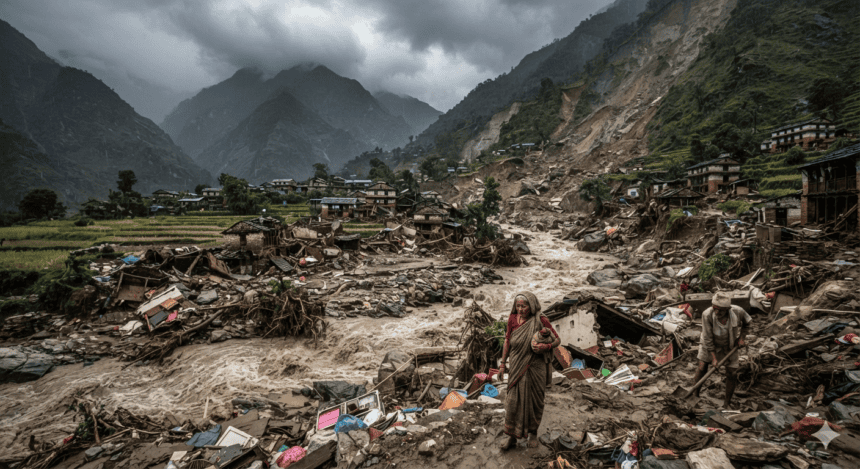
Nepal’s recent catastrophic floods, which claimed over 200 lives and left entire communities buried in mud, are no longer being viewed as isolated freak weather. Meteorologists and climate scientists are pointing to a direct link between rising global temperatures and the erratic, high-intensity rainfall that paralyzed the Kathmandu Valley and surrounding regions.
The pattern is shifting. What used to be predictable monsoon cycles have morphed into short, violent bursts of rain that the region’s topography isn’t built to handle. As the atmosphere warms, it holds more moisture—leading to “cloudburst” scenarios where a month’s worth of rain falls in a matter of hours.
For the people living along the Bagmati River, the consequences are visceral. Entire neighborhoods were submerged overnight as the river breached its banks, turning streets into debris-choked torrents. The devastation exposed a stark reality: Nepal’s infrastructure, from its drainage systems to its mountain roads, is struggling to keep pace with a changing climate.
“We are seeing a clear intensification of extreme weather events,” said a regional climate researcher familiar with the Himalayan basin. “The frequency of these events is outstripping our capacity to adapt. We aren’t just dealing with rain anymore; we’re dealing with a fundamental shift in the hydrological cycle of the mountains.”
The economic toll is mounting, but the human cost is harder to quantify. With thousands displaced and critical infrastructure like bridges and power plants damaged, the recovery process will take years. The government’s challenge is now twofold: providing immediate relief while trying to design a disaster-resilient future for a landscape that is becoming increasingly volatile.
While Nepal contributes a negligible amount to global carbon emissions, it sits on the front lines of the crisis. Glacial retreat and unpredictable snowmelt are already putting the country’s water security at risk. When those long-term shifts collide with sudden, extreme monsoon surges, the result is the kind of tragedy the country witnessed this past week.
The disaster serves as a grim template for other high-altitude nations. As the climate warms, the Himalayan region faces an era where the mountains themselves are becoming hazards. Without significant international support for climate adaptation, the question for Nepal is no longer if the next disaster will strike, but how much worse it will be.