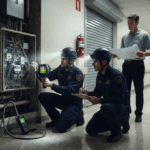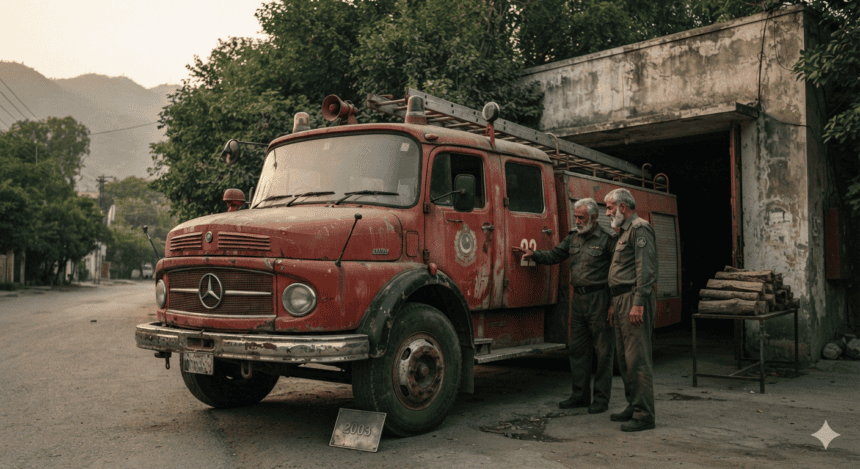
The Capital Development Authority (CDA) is operating a fire brigade fleet that is, in many instances, two decades old. Maintenance logs and internal assessments confirm that the emergency response vehicles protecting Islamabad are well beyond their intended service life, leaving the city’s safety net dangerously thin.
While the capital has expanded rapidly, its firefighting capability has remained static. The aging trucks suffer from frequent mechanical failures, sluggish response times, and a lack of modern equipment required to combat fires in the city’s growing number of high-rise buildings.
“We are fighting modern fires with vintage tools,” said one veteran firefighter who requested anonymity due to department policy. “When a call comes in, half the battle is just getting the engine to start and the pump to hold pressure.”
The discrepancy between the city’s growth and its emergency infrastructure is stark. Islamabad’s population has surged, and the skyline is dominated by steel and glass towers, yet the fire department still relies on equipment purchased in the early 2000s. Spare parts for these older models are increasingly difficult to source, leading to long periods where vehicles are sidelined for repairs.
Budgetary constraints have long been cited as the primary obstacle to modernization. Despite repeated proposals to overhaul the fleet, funding often gets diverted to road projects or administrative overhead, leaving the emergency services to patch up vehicles that should have been retired years ago.
The risks are not merely theoretical. In a fast-moving fire, every second counts. When a vehicle breaks down en route or fails to deploy its ladder system, the impact is measured in property loss and, potentially, human life.
For now, the city’s fire crews continue to operate with what they have—stretching the lifespan of rusted engines and worn-out hoses. Until the CDA prioritizes the replacement of this aging fleet, Islamabad’s first responders will continue to face emergencies with equipment that belongs in a museum, not on the front lines.