BOGOTA — President Gustavo Petro’s administration is facing intense scrutiny after the government launched a sudden, aggressive crackdown on undocumented migrants, marking a sharp departure from the country’s previously open-door policy.
The policy, which began rolling out late last week, prioritizes the immediate removal of individuals lacking legal status, particularly those linked to public order disturbances. Critics say the move is a political pivot from a leader who campaigned on humanitarian grounds and historically championed the rights of the displaced.
“This isn’t just about security; it’s about shifting the goalposts to appease critics of his economic agenda,” said Camilo Gonzalez, a lead analyst at the Bogota-based Institute for Development and Peace Studies. “The administration is trading its moral high ground for a quick win in the polls.”
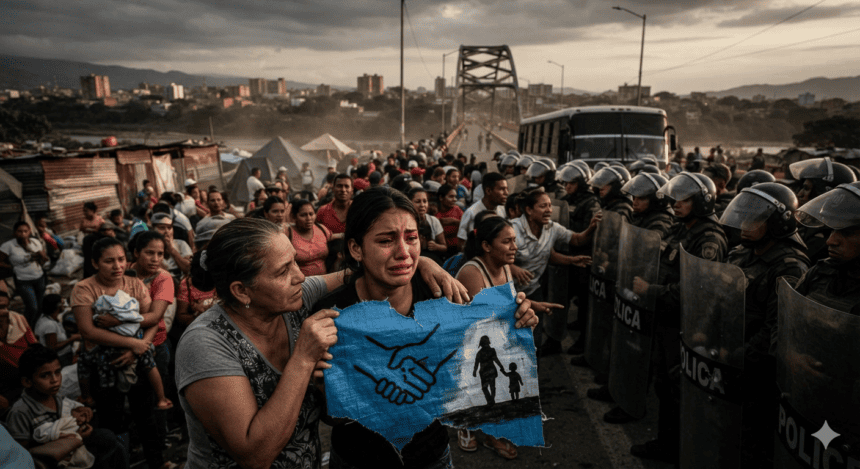
The backlash centers on the speed and the conditions of the deportations. Legal aid organizations report that detainees are being processed in makeshift facilities without adequate access to legal counsel or the ability to contest their status. Videos circulating on social media show families being escorted to border crossings in the middle of the night — scenes that have drawn sharp rebukes from both domestic and international observers.
Human Rights Watch and other advocacy groups have branded the policy “inhumane,” pointing to the lack of due process for those who have lived in Colombia for years. They argue the government is conflating migration with rising urban crime, a narrative they claim has no basis in official police statistics.
The administration has defended the move as a necessary step to stabilize local communities. Interior Minister Juan Fernando Cristo told reporters Tuesday that the state has an “unwavering obligation” to prioritize the safety of its citizens, insisting that the deportations are lawful and targeted only at those violating immigration codes.
The tension comes at a critical time for Petro, whose approval ratings have hovered at historic lows. As his legislative agenda stalls in Congress, the focus on migration appears designed to project a tougher image of governance.
But for the thousands caught in the dragnet, the political maneuvering is a secondary concern. Many are now stranded at border points with no resources, facing an uncertain future in a region already struggling to manage the largest migration crisis in the Western Hemisphere.
Whether the government sustains this hardline approach will depend on the backlash from Petro’s own base, which has already begun to fracture over what many see as a betrayal of his electoral promises. For now, the buses keep moving toward the border, and the criticism shows no sign of slowing.