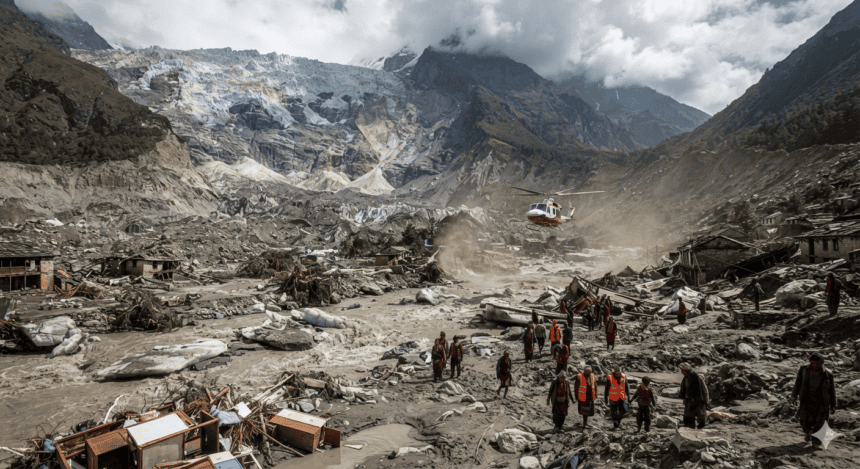
THAME, Nepal — A massive glacier breach sent a wall of water and debris tearing through the remote village of Thame on Friday, forcing residents to flee for their lives as the deluge decimated homes and critical infrastructure.
The collapse occurred high in the Himalayas, sending a sudden, violent surge of meltwater and sediment downstream. Footage captured by local residents shows the immediate aftermath: a churning, dark torrent sweeping through the village, stripping away buildings and leaving the valley floor unrecognizable within minutes.
For the people of Thame—a high-altitude settlement popular with climbers and trekkers—the destruction is total. Authorities confirm that at least 20 houses, a school, and a local clinic were either washed away or severely damaged. While search and rescue teams have evacuated the majority of the population, the sheer scale of the debris makes assessing the true toll on both property and livestock a slow, dangerous process.
Climate scientists have long warned of this specific threat. As global temperatures rise, Himalayan glaciers are retreating at an accelerated rate, leaving behind unstable “proglacial” lakes. When the natural dams holding these lakes—or the ice walls themselves—give way, the result is a Glacial Lake Outburst Flood (GLOF). These events are notoriously difficult to predict, often providing little to no warning for those living in the path of the water.
“We’ve lived with these mountains our whole lives, but this was different,” said one local resident, who spent the weekend salvaging what remained of his shop. “The sound wasn’t like a river; it was like the mountain itself was breaking apart.”
The Nepalese government has deployed army units to the Khumbu region to assist with emergency relief. However, the geography of the area is working against them. Heavy rains and the instability of the terrain have hampered helicopter access, leaving the displaced population largely dependent on local Sherpa guides and initial ground-level relief efforts.
This disaster underscores a grim reality for Nepal. While the country contributes less than 0.1% of global greenhouse gas emissions, it sits on the front lines of the climate crisis. With over 2,000 glacial lakes identified as potentially dangerous across the Himalayan range, experts argue that yesterday’s tragedy in Thame is unlikely to be an isolated incident.
For now, the focus remains on the displaced. As the waters recede, the village faces a long, uncertain road to recovery, with the looming question of whether the valley remains safe enough to rebuild at all.