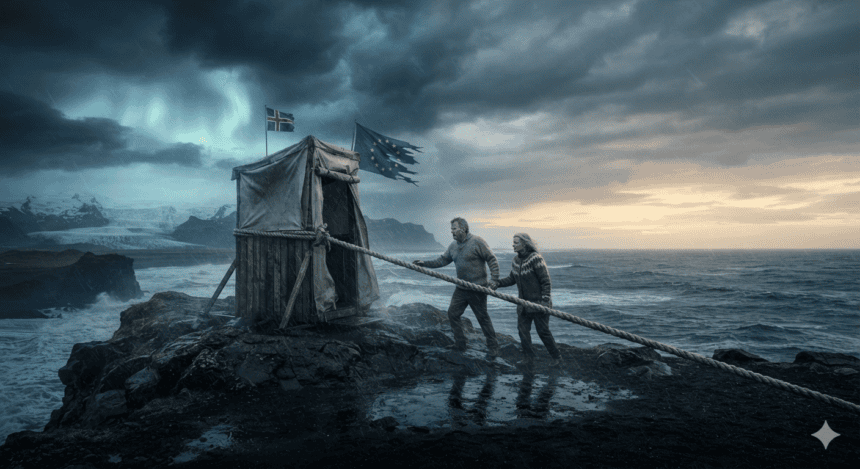
REYKJAVIK — Icelanders head to the polls Saturday in a snap election defined by deep divides over the country’s future relationship with the European Union. The vote follows the sudden collapse of the ruling coalition last month, leaving voters to decide between traditional isolationism and a potential return to the EU negotiating table.
The political crisis sparked when Prime Minister Bjarni Benediktsson of the Independence Party pulled the plug on his three-party government. The coalition, which included the Left-Green Movement and the Progressive Party, had been paralyzed by internal disputes over migration, energy policy, and the economy.
Polls suggest a fractured parliament is inevitable. The Independence Party, which has anchored Icelandic politics for decades, faces a rare challenge from a surging field of smaller parties. Among them, the Social Democratic Alliance has gained significant momentum by campaigning on a platform of reopening EU membership talks — a move that has historically been political poison in a nation fiercely protective of its fishing waters and sovereign control.
“People are tired of the gridlock,” says Jónas Gunnarsson, a political analyst based in Reykjavik. “The coalition didn’t just disagree on policy; they stopped functioning. This election isn’t just about the EU; it’s a referendum on whether the old guard can still govern.”
The economic stakes are high. Inflation remains stubborn, and high interest rates have squeezed household budgets across the island. While the fishing industry remains the bedrock of the economy, younger voters are increasingly eyeing the benefits of the European single market, particularly regarding trade stability and currency fluctuations.
Opponents of EU membership, led by the Independence Party, argue that Brussels would demand concessions on fishing quotas that Iceland simply cannot afford to make. They maintain that the country’s prosperity depends on its ability to strike independent trade deals globally.
“The EU question is the elephant in the room,” notes economist Helga Sigurðardóttir. “But for the average voter, the real issue is the cost of living. Whoever wins will have to address the interest rates before they even touch the Brussels file.”
As ballot boxes open, the country is bracing for weeks of complex coalition negotiations. Even if the pro-EU factions secure a plurality, forming a government that can survive a vote on membership remains a steep climb.
For Iceland, the path forward is narrow. The results Saturday will determine whether the nation continues to navigate global markets alone or if it is finally ready to reconsider a seat at Europe’s table.