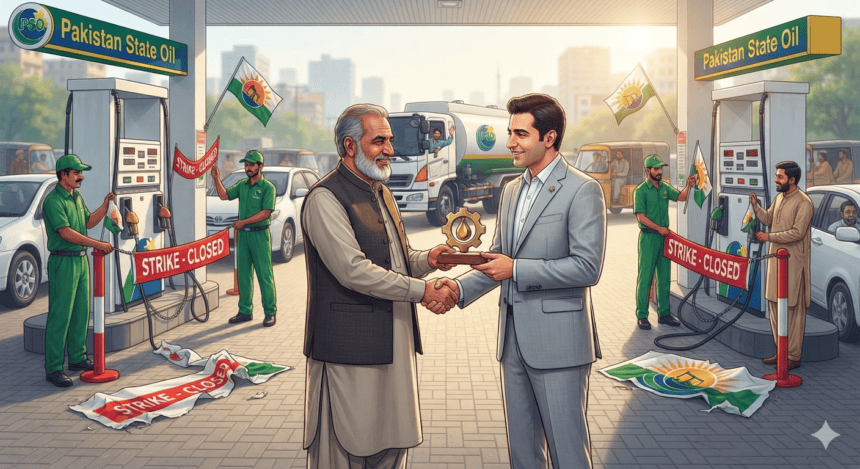
Pakistan’s fuel supply chain avoided a nationwide standstill after the government agreed to increase profit margins for petroleum dealers. The decision, finalized late Thursday, prompted the Pakistan Petroleum Dealers Association (PPDA) to suspend its strike call that was set to paralyze pumps across the country starting Friday.
The agreement guarantees a margin hike of Rs1.35 per liter for petrol and diesel. Dealers had been lobbying for this adjustment for months, citing the rising cost of electricity and labor as unsustainable burdens on their daily operations.
“We were pushed to the wall,” said a provincial lead for the dealers’ association. “The government finally acknowledged that running a station at the previous margin was no longer a business, but a loss-making exercise.”
The move marks a tactical retreat for the petroleum ministry. Officials initially resisted the demand, fearing any increase in margins would immediately push pump prices higher for consumers already struggling with record inflation. However, the threat of a countrywide shutdown—which would have halted transport and logistics—forced the administration’s hand.
The ministry expects the hike to be implemented through a price adjustment in the upcoming fortnightly review. While dealers view this as a victory, economists warn that the cost will inevitably be passed on to the public.
Fuel prices in Pakistan have remained volatile due to global market fluctuations and the currency’s performance against the dollar. By shifting the burden of dealer margins into the retail price, the government is essentially insulating the oil companies while keeping the supply chain moving.
For now, the pumps remain open. But as the next price review approaches, the underlying tension between dealer profitability and consumer affordability remains unresolved.