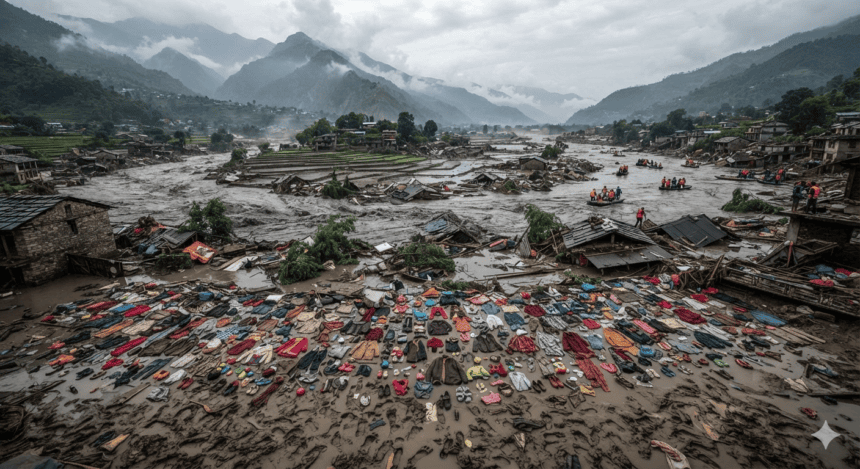
KATHMANDU/BEIJING — The combined toll of missing persons across Nepal and China has surged past 2,400 following a week of relentless monsoon rains and flash flooding that have decimated infrastructure and trapped thousands in remote regions.
Government agencies in both nations are scrambling to reach cut-off villages where communication lines remain severed. In Nepal, the death toll has climbed steadily as landslides bury entire settlements along the Kathmandu Valley and surrounding mountain districts. Search and rescue operations are hampered by thick mud and unstable terrain, leaving families in a state of desperate uncertainty.
The scale of the disaster is staggering. In China, the Yangtze River basin is experiencing record-breaking water levels, forcing millions to evacuate as reservoirs reach critical capacity. Local officials are under intense scrutiny as reports emerge of breached levees and failed drainage systems in urban centers that were expected to withstand such surges.
“We have lost everything,” said a resident in a suburban district of Kathmandu, who spent the last three days searching for his family near a collapsed riverbank. “The authorities told us to stay alert, but the water rose faster than anyone could run.”
Engineers and disaster management experts point to a combination of unseasonal rainfall and rapid, unchecked urban development as the primary drivers of this crisis. While climate scientists have long warned of increased intensity in regional weather patterns, the infrastructure in both countries has failed to adapt to the new reality of “extreme weather normal.”
Financial markets are already bracing for the impact, with supply chain disruptions expected to ripple through the region. Both governments have pledged emergency funds, yet the immediate need remains manpower and heavy machinery—resources currently stuck on blocked mountain highways.
For now, the focus is strictly on the search. With weather forecasts predicting another wave of heavy rain within 48 hours, the window to find survivors in the debris is closing. Those still waiting for news of their loved ones are left to wonder when the water—and the uncertainty—will finally recede.