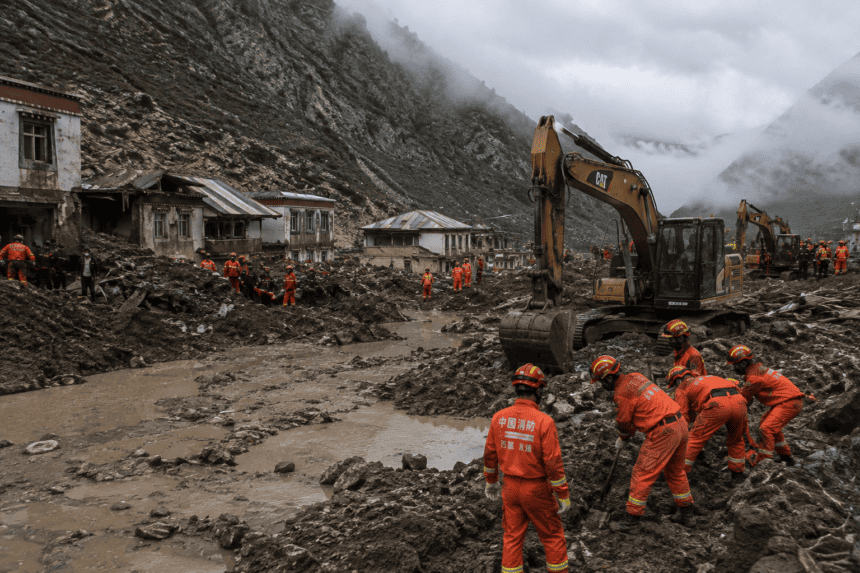
A massive mudslide in Tibet has claimed at least 16 lives, with 546 people reported missing as rescue operations scramble to reach the remote disaster site. State media confirmed the toll early today, though communication lines in the region remain unstable, complicating efforts to verify the exact number of those swept away.
The slide hit a high-altitude settlement in the early hours, burying residential structures and infrastructure under tons of debris. Local authorities have deployed emergency teams, but the altitude and difficult terrain are stalling the arrival of heavy machinery.
The missing count, which remains unusually high, suggests that the disaster struck a densely populated area or a major work camp. Officials have yet to clarify if the victims are residents or workers associated with regional infrastructure projects, which have seen a surge in activity across the Tibetan plateau in recent years.
Regional weather stations recorded record-breaking rainfall in the days leading up to the incident. Geologists have long warned that the combination of rapid infrastructure development and changing weather patterns in the Himalayas has increased the frequency of landslides in the region.
“We are doing everything possible to locate survivors, but the volume of mud and the instability of the mountainside is working against us,” a local disaster management official told state television. He declined to comment on whether the area had been flagged for geological risks prior to the tragedy.
The provincial government has declared a state of emergency, moving medical supplies and search-and-rescue dogs toward the site. However, with hundreds still unaccounted for, the death toll is expected to climb as rescue workers clear the primary layers of silt and rock.
Satellite imagery of the affected zone shows significant destruction across a three-kilometer stretch of the valley. For the families of the missing, the wait for news has turned into a desperate vigil as the window for finding survivors narrows by the hour.