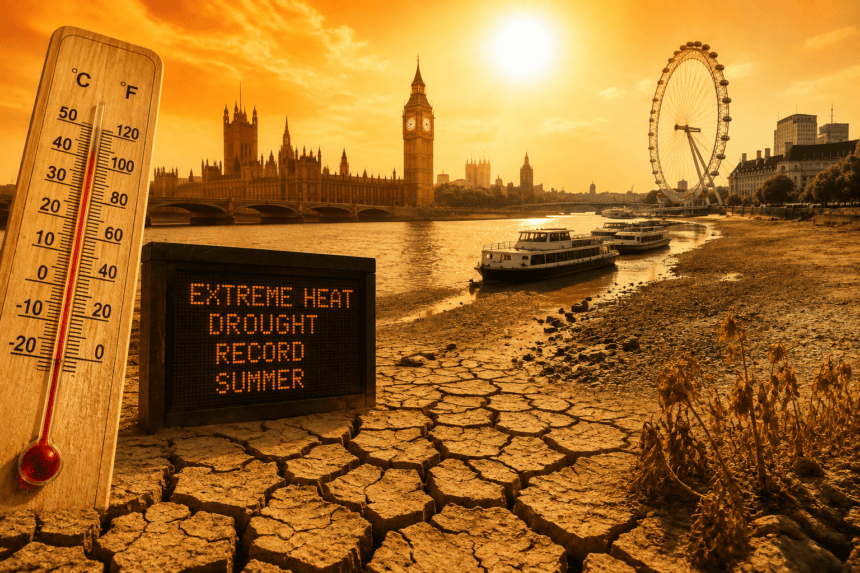
The UK experienced its hottest summer since records began in 1884, as a prolonged sequence of extreme heat and drought conditions pushed temperatures to unprecedented levels. The Met Office confirmed the peak, noting that 2024’s summer months eclipsed the previous benchmarks set during the 2018 and 2022 heatwaves.
The data marks a stark shift in the country’s climate trajectory. While the British public is accustomed to unpredictable weather, this year’s sustained heat—coupled with a notable lack of rainfall—placed severe strain on the national power grid, agricultural output, and emergency services.
“We aren’t just seeing one-off spikes anymore,” said a senior climatologist at the Met Office. “We are seeing a systemic increase in the duration and intensity of these heat events. The data is clear: the baseline for a ‘normal’ British summer has fundamentally moved.”
The environmental impact was immediate. Reservoirs across the south and east of England dropped to levels not seen in decades, triggering localized water restrictions. Farmers reported significant crop failures in wheat and barley harvests, with dry soil conditions complicating the planting cycle for the upcoming winter season.
The heat also tested the limits of national infrastructure. Rail networks faced speed restrictions as tracks buckled under the thermal expansion, while hospitals reported a surge in admissions linked to heat exhaustion among the elderly and vulnerable populations.
This summer’s record-breaking heat follows a broader pattern of warming identified by the Intergovernmental Panel on Climate Change (IPCC). While the UK has historically been shielded from the most extreme Mediterranean-style heat, the shift suggests that the country’s homes and transport systems—designed for a cooler, wetter climate—are increasingly ill-equipped for the current reality.
As the cooler autumn weather finally takes hold, the government faces mounting pressure to accelerate climate adaptation strategies. The question is no longer whether the climate is changing, but how quickly the UK can retrofit an island nation built for a different century.