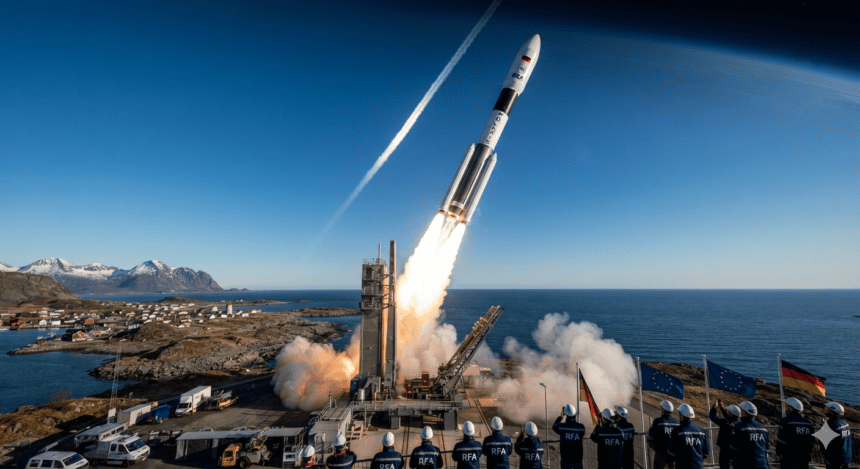
KIRUNA, Sweden — A private German rocket reached orbit this week, marking a shift in Europe’s space ambitions. Isar Aerospace’s Spectrum vehicle successfully deployed its payload, proving that a commercial player can finally challenge the state-led dominance that has defined the continent’s space sector for decades.
The launch took place from the Esrange Space Center in Sweden, a facility that has long served scientific research but is now pivoting toward the commercial satellite market. For Isar Aerospace, the mission was more than a technical test; it was a survival test. The Munich-based company has spent years securing private capital to compete with the likes of SpaceX, aiming to slash the cost of launching small satellites into low Earth orbit.
Europe has relied on the Ariane program for years. While reliable, the heavy-lift rockets are expensive and often booked years in advance. Small satellite operators have been forced to ship their hardware to the United States or New Zealand to find a ride. Isar’s success provides a local alternative — and one that doesn’t require a government-sized budget.
“We aren’t just launching a rocket,” said a senior engineer close to the project. “We’re launching the infrastructure for a European space economy that doesn’t have to wait for a state mandate to get off the ground.”
The rocket’s flight path over the Arctic was meticulously tracked by ground stations in Sweden and Norway. Unlike the massive, multi-stage rockets that dominate headlines, Spectrum is built for speed and frequency. The company plans to iterate on this design, aiming for a launch cadence that could eventually reach once every two weeks.
The industry is watching closely. Investors have poured hundreds of millions into European “NewSpace” startups, betting that the continent’s satellite manufacturers will prefer a local launch provider. Until now, that bet was purely theoretical. With this mission, the math has changed.
Competition remains stiff. Rocket Factory Augsburg and other European contenders are also testing their own vehicles, meaning Isar’s victory is just the starting gun. For now, the German startup holds the lead, and for the first time, Europe has a commercial path to orbit that it owns entirely.