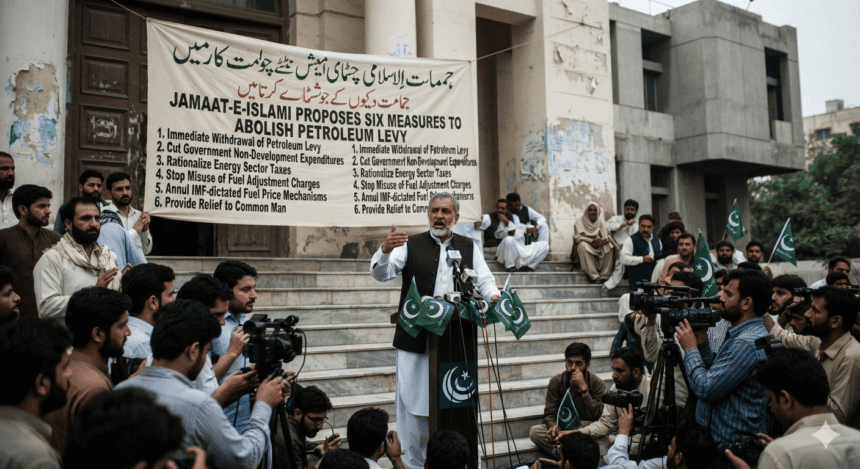
Jamaat-e-Islami (JI) has unveiled a six-point proposal aimed at dismantling the current petroleum levy, a move the party claims will provide immediate relief to inflation-stricken households. The proposal centers on reducing the government’s reliance on fuel taxes to fund administrative expenditures, arguing that the current pricing structure is unsustainable for the public.
At the core of the plan is a demand for the federal government to audit the cost of oil imports and refine the supply chain. JI leadership argues that the “hidden costs”—including various surcharges and excessive profit margins for oil marketing companies—are artificially inflating the pump price beyond international market rates.
The party’s economic team has identified the petroleum levy as a primary driver of the current cost-of-living crisis. By capping the levy and eliminating non-essential surcharges, the JI asserts the government could reduce fuel prices by a significant margin without collapsing the national budget.
“The government treats fuel as a cash cow to cover its own inefficiency,” said a senior JI spokesperson during a press briefing in Islamabad. “We’ve mapped out exactly where the fat can be trimmed from the pricing formula, and it doesn’t require a bailout—it requires political will.”
The proposal also calls for a shift in how the government manages the Petroleum Development Levy (PDL). Rather than using these funds to plug gaps in the federal deficit, the party suggests redirecting the revenue toward subsidizing public transport and logistics for the agricultural sector.
Economists following the proposal note that while the plan addresses the immediate pain point for consumers, it faces a steep climb. The federal government is currently bound by stringent revenue targets set under the latest International Monetary Fund (IMF) program, which explicitly requires the maintenance of these levies to ensure fiscal stability.
Despite these constraints, the JI is pushing for a parliamentary debate on the matter, hoping to force a review of the pricing structure before the next budget cycle. For now, the government remains silent on the specifics of the proposal, prioritizing the existing fiscal framework over the populist tax reforms requested by the opposition.
Whether the administration will entertain a restructuring of fuel taxes remains a secondary concern to the immediate revenue pressures dictated by the IMF. For the average commuter, however, the JI’s plan offers a concrete, if politically difficult, path toward lower prices at the pump.