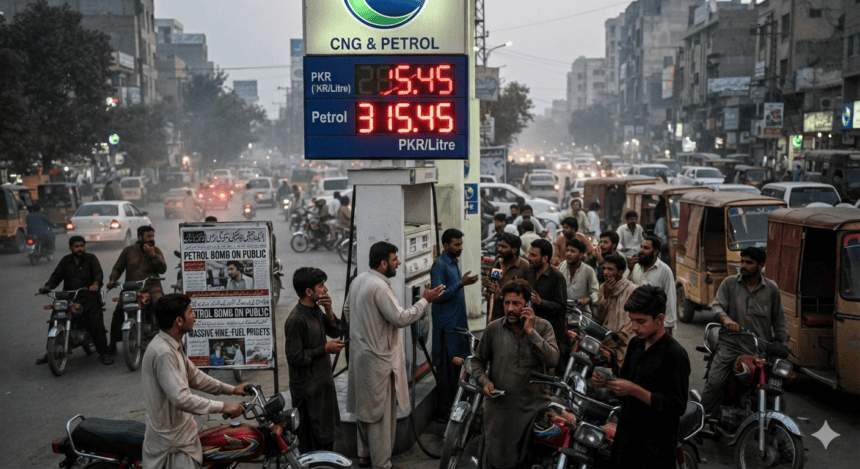
The federal government has hiked petrol prices by Rs13.55 per liter, effective immediately. The new rate stands at Rs285.34, pushing the cost of fuel to levels that threaten to further squeeze household budgets already reeling from record-high inflation.
High-speed diesel also saw a sharp increase of Rs27.56 per liter, bringing the price to Rs290.38. These adjustments follow a fortnightly review, driven by the government’s desperate need to secure tax revenue and meet conditions set by the International Monetary Fund (IMF).
The timing of the hike is particularly stinging. Pakistan’s inflation rate remains hovering above 20%, and the cost of transport—already a significant portion of the average worker’s income—will now bleed into the prices of food and essential goods across the country.
“We had little room to maneuver,” an official from the Finance Division said, speaking on condition of anonymity. “The fiscal deficit targets are non-negotiable if we want to keep the current program on track.”
The decision comes despite a slight dip in global oil prices earlier this month. The government argued that the weakening rupee and the need to levy additional petroleum development levies (PDL) necessitated the move. Critics, however, point to the lack of transparent relief measures for low-income commuters who rely on public transport, which is expected to see a secondary price jump as operators pass the fuel costs onto passengers.
Transport associations have already signaled plans to protest, citing that the rising cost of operations makes current fare structures unsustainable.
For the average citizen, the math is simple and brutal: commuting to work or moving goods just became significantly more expensive. With no subsidies in sight, the burden of stabilizing the national ledger continues to fall squarely on the consumer.