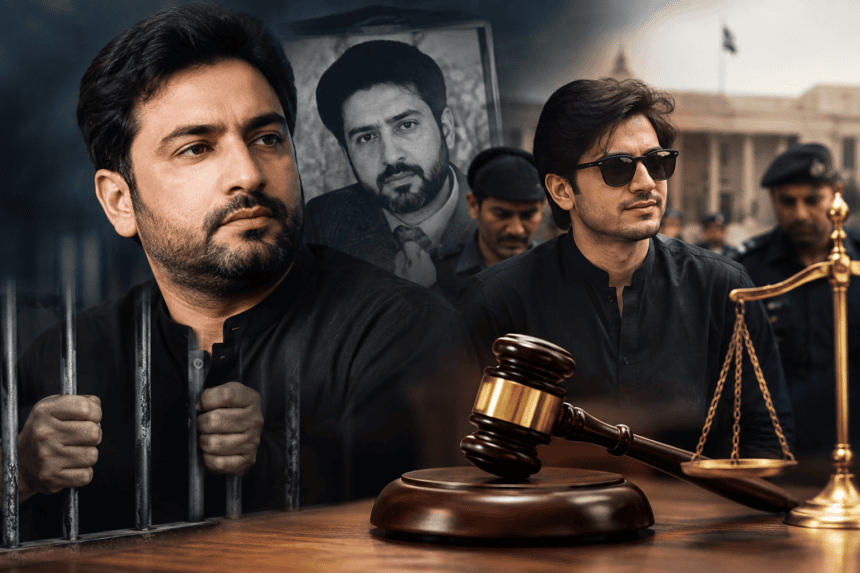
The Lahore High Court has granted post-arrest bail to Kunain Shah, the primary suspect in the high-profile murder of Arif Khan Saqi. The decision, delivered by a single-member bench, marks a significant shift in the legal proceedings surrounding the case that has gripped local public attention for months.
Shah, who has been in custody since his arrest, walked out of jail after the court accepted his bail plea, citing a lack of concrete forensic evidence linking him directly to the crime scene at the time of the incident. His legal team argued that the prosecution failed to establish a clear timeline, leaving the initial charges on shaky ground.
For the family of Arif Khan Saqi, the court’s decision is a major blow. They have consistently maintained that Shah was the mastermind behind the attack, pointing to prior disputes and alleged threats. Outside the courtroom, the victim’s brother told reporters that the family feels “abandoned by the justice system,” vowing to challenge the bail order in a higher court.
The prosecution’s case initially relied heavily on eyewitness testimonies and call detail records. However, during the bail hearings, defense attorneys successfully challenged the reliability of these witnesses, highlighting inconsistencies in their statements that were recorded weeks after the murder. The judge noted that the investigation, as it stands, lacks the “clinching evidence” required to keep the accused behind bars while the trial drags on.
This case has been a flashpoint for local tensions, with various political and community groups staging protests demanding a swift trial. The police, meanwhile, have come under fire for what critics describe as a “sloppy and slow” investigation. Senior police officials insist they are still building a comprehensive case, despite the setback in court.
With the main suspect now free on bond, the burden shifts to the prosecution to present more compelling, irrefutable evidence when the trial formally resumes. For now, the legal battle moves from the investigative phase into a courtroom struggle that promises to be just as contentious as the events that led to the murder.