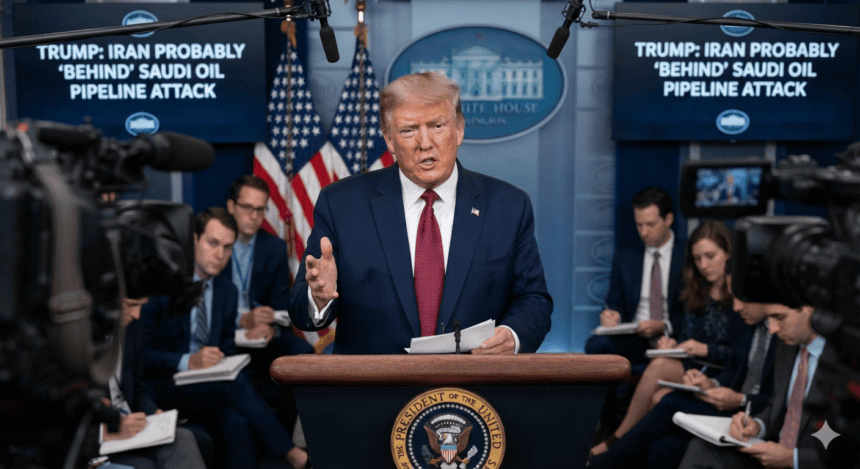
DUBLIN, September 12, 2026: US President Donald Trump has said Iran was probably behind a drone attack that forced Saudi Arabia to shut down its strategically important East-West oil pipeline, escalating tensions across the Middle East and raising fresh concerns about global energy supplies.
Trump made the comments while speaking to reporters in Dublin on Saturday. Asked whether Iran was responsible for the attack, he indicated that he believed it probably was. However, the statement represents an attribution by Trump, rather than an independently established finding of Iranian responsibility.
Saudi Pipeline Hit by Drone Attacks
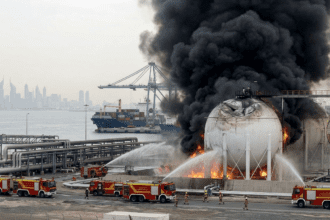
Saudi Arabia temporarily shut down the East-West pipeline after a series of attacks in the Riyadh and Medina regions. The attacks reportedly caused injuries, while Saudi authorities moved to halt the pipeline as a precaution and assess the damage.
The roughly 1,200-kilometre pipeline transports crude from Saudi Arabia’s oil-producing areas in the east to the Red Sea port of Yanbu. Its importance has increased because it allows Saudi Arabia to export oil without sending it through the strategically vital Strait of Hormuz.
Attack Reportedly Originated From Iraq
The incident has added another layer to the growing regional conflict.
Iraq has confirmed that the attacks originated from its territory and launched an investigation. Baghdad also dismissed a senior security official following the incident. Reports have linked the attack to Iran-backed militias operating in Iraq, although those groups have denied responsibility.
Saudi Arabia and the United States have blamed Iran-affiliated forces, while Trump went further by saying Iran was probably responsible. The situation remains politically sensitive because a direct attribution to Tehran could further increase pressure for military escalation.
Trump Speaks With Saudi Crown Prince
Trump also said he had spoken with Saudi Crown Prince Mohammed bin Salman, describing him as a “good friend.”
The conversation comes as Saudi Arabia faces increasing threats to both its energy infrastructure and maritime trade routes. The kingdom has been seeking greater security support while attempting to prevent the conflict from spreading further.
Trump also said Yemen’s Iran-aligned Houthi movement had contacted his administration and indicated that it did not want direct US involvement in the conflict.
Growing Threat to Global Oil Supplies
The pipeline attack comes amid wider disruptions to energy routes across the Middle East.
The Strait of Hormuz, through which a major share of global oil shipments normally passes, has already been severely disrupted by the conflict. At the same time, Houthi forces have increased pressure around the Bab el-Mandeb Strait, another crucial route connecting the Red Sea with the Gulf of Aden.
The combination of threats to both maritime routes and Saudi Arabia’s alternative land-based export route has increased concerns about the reliability of global oil supplies.
Oil prices have already moved sharply higher amid the growing uncertainty, with Brent crude recently moving above $100 a barrel.
Risk of Wider Regional Escalation
The latest attack comes during an already serious confrontation involving Iran, the United States, Saudi Arabia and Iran-aligned armed groups across the region.
Analysts and officials are watching closely to see whether the pipeline attack leads to further military action. Any direct escalation between Iran and Saudi Arabia, or between Iran and the United States, could threaten additional energy infrastructure and shipping routes.
For now, Saudi Arabia has focused on securing its infrastructure and investigating the attack, while Washington is weighing how to respond without triggering a wider regional conflict.
The incident demonstrates how vulnerable the region’s energy network remains—and how an attack on a single pipeline can quickly become an international economic and security concern.