Tehran has abandoned the shadows. After years of relying on proxy networks to maintain plausible deniability, Iran’s recent direct military engagements suggest a fundamental pivot: escalation is now its primary tool for geopolitical leverage.
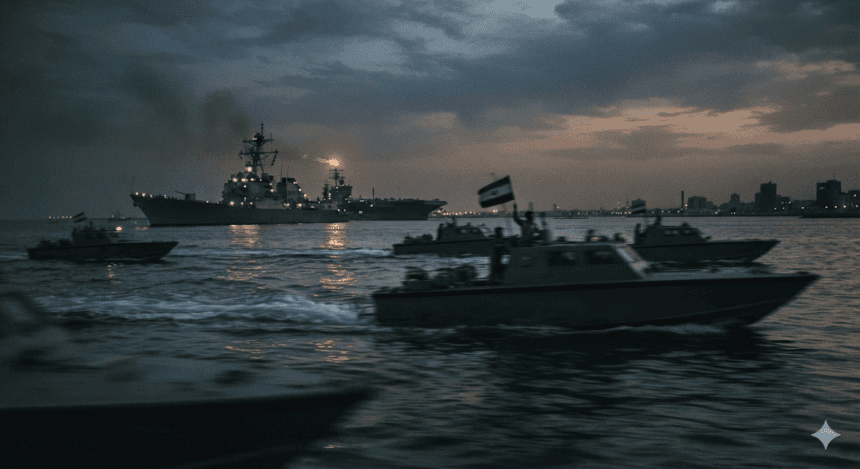
The shift was cemented when Iran traded direct missile fire with Israel and pushed its regional footprint into high-stakes friction with U.S. naval assets. For the Islamic Revolutionary Guard Corps (IRGC), the old calculus—avoiding a direct confrontation with Washington—has been replaced by a calculated gamble. They’ve realized that the U.S. is desperate to avoid a regional war, and they are exploiting that hesitation to extract concessions.
“The Iranians are playing a game of chicken, but they’ve changed the rules,” said a Washington-based security analyst who tracks IRGC operations. “They no longer fear the ‘red lines’ that used to keep them in check. They’ve seen that the cost of direct action is manageable, while the political reward—shaping the regional order—is massive.”
The U.S. military posture in the Middle East, once a deterrent, is now being treated as a target. By keeping pressure on shipping lanes and regional bases, Tehran forces the Pentagon to divert resources, distracting from other global priorities like the Indo-Pacific. Every drone intercepted or missile launched creates a budgetary and logistical drain on Washington that Iran deems a strategic victory.
Internally, the narrative in Tehran has hardened. Hardline factions within the regime argue that the “maximum pressure” campaign of the past decade failed to collapse their economy or their government. Now, they see their aggressive posture as the only way to force the U.S. to the negotiating table on their terms.
Yet, this path carries a volatile risk. By stripping away the buffer of proxy warfare, Iran has narrowed the margin for error. A single miscalculation—a stray missile hitting a U.S. vessel or a mass-casualty event on an American base—would force a kinetic response that even the most cautious White House could not ignore.
Tehran isn’t looking for a total war. They are looking for a permanent state of managed crisis. As long as Washington prioritizes stability over confrontation, Iran’s strategy of aggressive leverage will continue to define the reality of the Middle East.