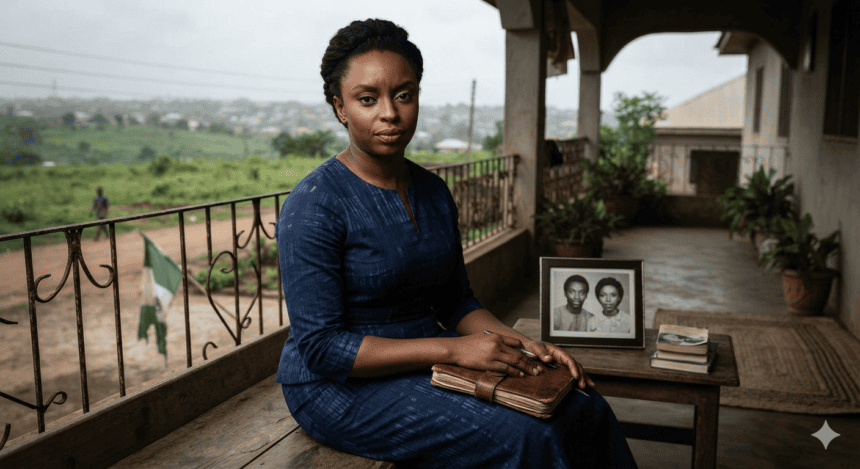
The literary world knows Chimamanda Ngozi Adichie for her sharp, unyielding voice on the Nigerian experience. Lately, that voice has grown quiet, replaced by a profound, public mourning that reflects the deepening disillusionment of a writer who once championed her homeland’s potential.
The shift isn’t sudden. It began with the loss of her father, James Nwoye Adichie, in 2020. His death, compounded by the logistical failures of Nigeria’s healthcare system, transformed her perspective. What was once a relationship defined by critical affection has curdled into something far more painful: the realization that the country she writes about is failing its own people in the most visceral ways.
“Nigeria is a place where you are constantly bracing for the next blow,” she told associates during a private discussion regarding her recent literary hiatus. For Adichie, the pain is twofold. There is the individual grief of a daughter, and then there is the collective exhaustion of watching a nation struggle with governance, security, and a dwindling sense of hope.
She hasn’t been shy about the source of her frustration. In recent essays and interviews, Adichie has dismantled the narrative of “resilience” often forced upon Nigerians. She argues that calling a population resilient is just a polite way of ignoring the systemic failures that force them to endure unnecessary hardship.
The weight of this observation has shifted her work. Her recent output is less about the grand sweep of post-colonial identity and more focused on the intimate, often agonizing, details of life under a regime that feels indifferent to its citizens’ survival. It’s an evolution from the storyteller of *Half of a Yellow Sun* to a witness who can no longer look away from the rot.
Critics often look for the “next great Nigerian novel” from her pen. Instead, they’re getting a critique of the Nigerian state that is as uncomfortable as it is necessary. She’s no longer interested in the aesthetic of the struggle; she’s focused on the cost.
For a writer whose career was built on bridging the gap between Nigeria and the world, this current detachment is a signal. It suggests that for Adichie, the country is no longer just a setting or a muse. It is a wound.
As she continues to navigate this period of personal and national reckoning, one thing is clear: the Nigeria she once invited the world to understand has become a place she is currently trying to survive. Whether she finds her way back to the optimism of her earlier work remains an open question—one that likely depends less on her writing and more on the state of the nation itself.