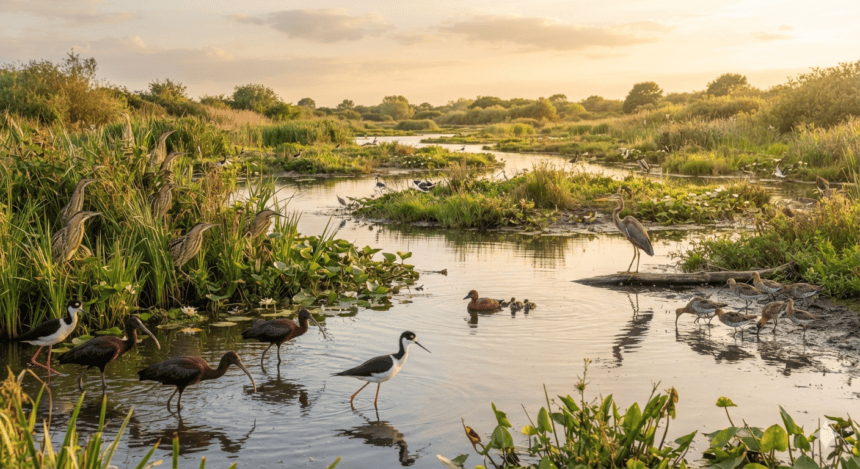
The marshland at Blackwood Creek looked like a wasteland three years ago. Today, it’s a sanctuary. Ornithologists confirmed this week that the endangered Black-necked Stilt and the elusive Marsh Sandpiper have returned to the site, marking a significant recovery for a habitat once choked by industrial runoff.
The restoration project, a $4.2 million effort led by local conservationists and the regional water authority, involved dredging toxic sediment and reintroducing native sedge grasses. It wasn’t just about planting greenery; it was about re-engineering the water flow to mimic historical flood patterns that had been absent for decades.
“We didn’t just invite the birds back; we rebuilt their grocery store,” said Sarah Jenkins, the lead ecologist on the project. She spent the better part of two years wading through the muck to monitor water quality. “When the invertebrates returned, we knew the rest of the food chain wouldn’t be far behind.”
The numbers back her up. The recent census recorded 42 distinct species nesting in the marsh, up from just seven in 2021. The return of these birds serves as a biological report card for the surrounding basin. If the birds are breeding, the water is clean.
Yet, the project faces a quiet threat. Increased housing development on the eastern perimeter of the wetland brings light pollution and domestic cats, both of which disrupt the delicate nocturnal feeding habits of the stilt populations. Local planners are now debating a mandatory buffer zone, a move that pits property developers against biologists.
For now, the birds have the upper hand. During the early morning hours, the sound of the marsh is no longer the silence of a dead ecosystem, but the distinct chatter of a nesting colony.
The recovery remains fragile, but for the local conservation groups, the return of the Black-necked Stilt is proof that nature doesn’t need to be managed—it just needs to be given a chance.